

Nepal Flash Floods
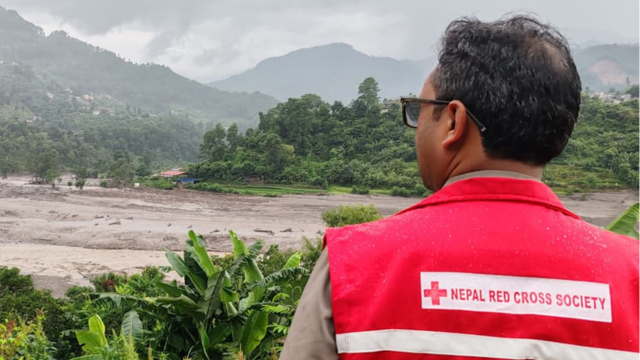 Photo: Nepal Red Cross Society
Last Updated: October 2, 2026
On August 26, 2026, a catastrophic flash flood swept through northern Nepal, destroying homes, roads, bridges, and other critical infrastructure. The largest impacts have been reported in the Rasuwa and Nuwakot districts, with multiple bridges washed away and major roadways disrupted.
In the weeks since the floods, the emotional impact has become more apparent as survivors adjust to the loss of family members, homes, businesses, and daily routines.
Despite progress in re-opening some roads, many areas still cannot be reached by ground transportation. Rivers have cut off access to essential services, and temporary structures have been set up to allow people to cross.
Thousands of people, including children, are living in temporary overcrowded shelters. In Bidur, the largest municipality of the Nuwakot district, many families now have the option to move into tented outdoor spaces for temporary shelter, instead of overcrowded facilities like schools.
People are slowly returning to see what remains of their homes. Residents are digging through mud-filled houses to recover their belongings and, in some cases, search for missing loved ones.
How the Nepal Red Cross is helping people impacted by the flash floods
The Nepal Red Cross has continued leading response efforts, providing critical support to those impacted by the flash floods.
Their support includes:
- Providing food and water, and distributing emergency supplies including tarpaulins, blankets, first aid kits, stretchers, emergency water sanitation and hygiene kits, and body bags.
- Supporting with vaccinations for water-borne diseases and providing clean water to host communities and evacuation centres.
- Sending food items to the worst-affected areas in Rasuwa with support from the International Federation of the Red Cross (IFRC).
- Opening an emergency clinic in Nuwakot to provide urgently needed health care services.
- Supporting two evacuation centres in the Dhading district by setting up tents, organizing water tanks, and creating dedicated child-friendly spaces.
- Helping people in Nuwakot cross the temporary rope bridge over the Trishuli River to reach the public hospital.
- Providing basic mental health and well-being services.
- Providing multi-purpose cash assistance to displaced people in Bidur.
How the Canadian Red Cross is supporting the Nepal flash floods response
- The Canadian Red Cross has already provided funding to the Nepal Red Cross to support first aid, mental health and well-being support, and provide medical supplies to health care facilities.
- The Government of Canada, working with the Canadian Red Cross and the IFRC, is sending more than 18,000 emergency relief items to Nepal. These items included shelter kits and tools, hygiene items and solar lights.
- With the support from the Government of Canada, the Canadian Red Cross has sent a humanitarian expert and medical supplies to support the Nepal Red Cross emergency clinic.
- We are grateful to the Government of Canada for its contribution to the Red Cross response in Nepal.
- In partnership with the Nepal Red Cross and other Red Cross National Societies, the Canadian Red Cross worked to improve access to healthcare in Nepal after the 2015 earthquake. This includes providing trainings for healthcare professionals, providing first aid training to community members, strengthening the emergency and trauma services, and developing a mobile emergency field clinic. The clinic has been deployed to respond to outbreaks of water-borne diseases for the past 10 years across Nepal.
How you can help people impacted by the flash floods in Nepal
People in Canada wishing to help are encouraged to make a donation to the Canadian Red Cross Nepal Flash Floods Appeal.
Donate NowThe Red Cross is working to get help to those impacted by the Flash Floods in Nepal as quickly as possible. Money raised will enable the Red Cross to support immediate relief, recovery efforts, resilience, and preparedness activities for future events in impacted and surrounding areas. As urgent needs are met in this crisis, funds may be used to support readiness to respond quickly to future disasters.