
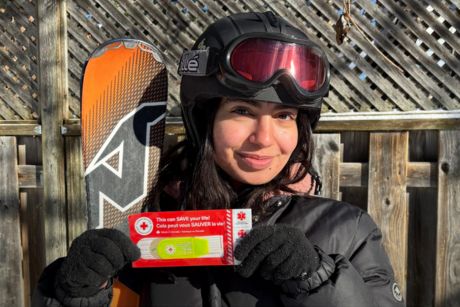
Staying prepared shouldn’t be complicated. A Medical Emergency Information (MEI) tag is a no-tech, no-fail tool that stores your critical health details and emergency contacts directly on your personal gear. It’s designed to help first responders and loved ones act quickly—even when you can’t speak for yourself.
First Aid
Blog Page Number 1Read blog posts from the Canadian Red Cross about First Aid and CPR
Latest Posts
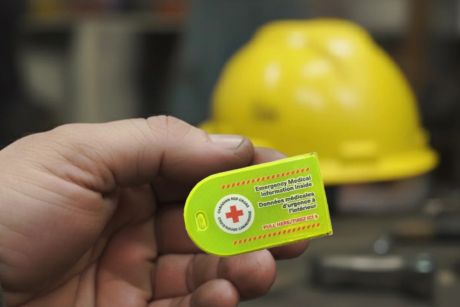
Being prepared can make a tremendous difference in an emergency. A Medical Emergency Information tag is a simple yet effective tool. It enables emergency professionals to make quick, informed decisions—which can help save lives.
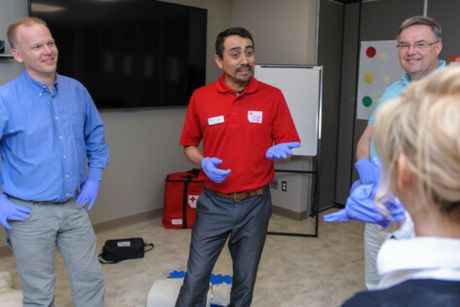
As extreme weather events become more frequent in Canada, knowing how to respond in an emergency is more important than ever. From scorching heat waves to dangerous cold snaps, wildfires, and severe storms, climate change is increasing the risk of injuries and health complications.
Photo: AV Unit / Canadian Red Cross
Self-care isn’t just about taking bubble baths or unplugging once in a while—it’s about building long-term habits that protect your mental and emotional well-being. One of the most effective tools for this is Psychological First Aid (PFA). It helps you understand stress, build resilience, and take control of your well-being every day.
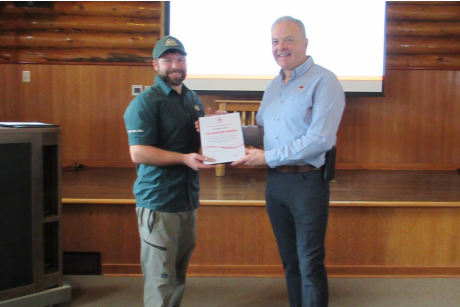
In Riding Mountain National Park, where peace can meet sudden emergencies, Duty Officers — Reid Ahntholz and Bradley Bator — became real-life heroes. During a busy July weekend, they responded fast to a visitor’s cardiac arrest on Lakeshore Trail. Using CPR, an AED, and their skills, they saved a life. Their actions turned a tragedy into hope — a true testament to First Aid training.
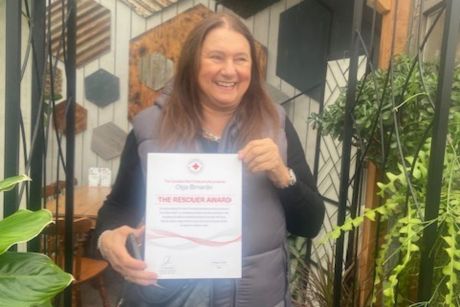
Olga works as the receptionist at the Canadian Red Cross in Hamilton. Her day started like any other day until everything changed suddenly. She came across someone showing obvious signs of opioid poisoning, and she did not freeze or fear. Instead, she reached for something stronger: a naloxone kit.
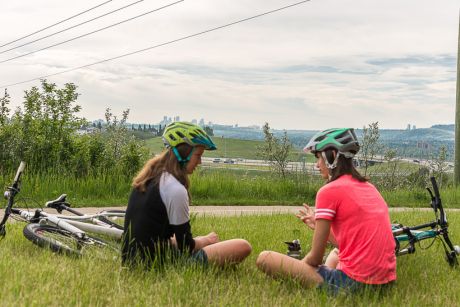
Many people who exercise regularly may also hide feelings of stress, managing anxiety, or emotional pain. They might appear fine on the outside, but they could be going through tough times inside. That’s why it's so important to unmask mental health and challenge our usual perceptions of what it looks like, especially in settings that seem the happiest on the surface.
Working in remote or wilderness environments comes with unique challenges. If you work in a national, provincial or regional park, or in an Indigenous Protected and Conserved Area, or as a wildland firefighter, as a wilderness fishing or hunting guide, or as part of a search and rescue team, help may be far away.