

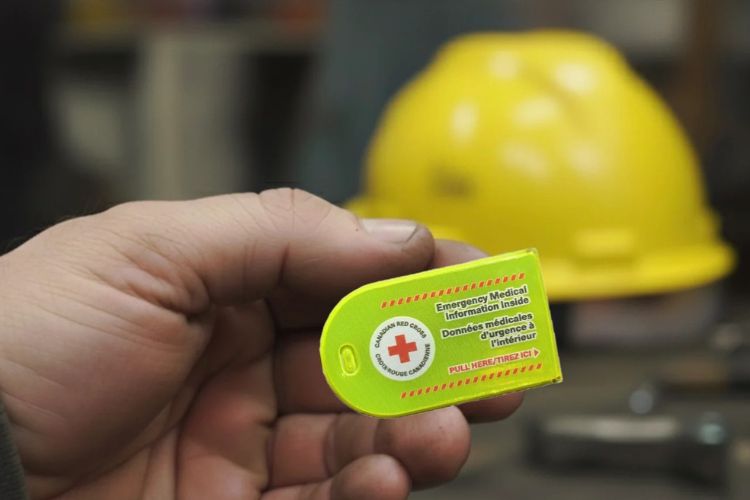
Photo: Canadian Red Cross
We know you want to protect your child. You do everything you can—teach them safety rules, keep an emergency kit at home, make sure they wear a seatbelt, and stay in touch when they’re away. Still, there are moments when you can’t be by their side, and having their key information easily available could be essential. That’s where a Medical Emergency Information (MEI) tag can make a big difference.
What Is a Medical Emergency Information tag?
A medical emergency information tag can be worn or attached using the included adhesive; it can be placed on any hard surface, such as a lunch kit or hard hat. This tag gives important health information to first responders during an emergency.
The Red Cross MEI has three elements.
1. The data carrier
It is made from a special, strong vinyl. The patented carrier is designed to be tamper-proof, aerodynamic, and weatherproof. You can use it in cold, snowy conditions and hot deserts. It can handle speeds over 180 MPH and take a lot of punishment.
2. The medical data form:
This form has information about the wearer's identity and medical info. It includes details like allergies, medications, blood type, and existing medical conditions.
This information helps first responders during an emergency response. It records everything that first responders and the receiving hospital need during triage. This form lets you write down your personal and medical details in one easy place. You can include:
- Blood type
- Sex
- Date of birth
- If you are an organ donor
- Medications and dosages
- Allergies
- Medical history
- Insurance information
- Emergency contact phone numbers
After filling out the form, simply fold the medical data form and place it into the medical data carrier, then gently tuck in the flap.
3. The safe adhesive:
Our adhesive does not produce heat, so it won't harm your helmet's shell. In fact, MEI glue is one of the few adhesives approved for use on hockey helmets.
The MEI is a no-fail medical information system that delivers key lifesaving data about the wearer. It also provides vital family contact information in the event of an emergency.
Once the form is filled out, and placed into the data carrier, use the provided 3M adhesive tape to stick it somewhere visible. This way, first responders or doctors can quickly see the information they need to treat you safely. You can stick or attach (using the provided wire cable ring) the bright, secure data carrier to a hard hat, helmet, backpack, safety gear, ID badge, mobility aid, golf bag, or child carrier. Applications are endless.
Why It’s Important in an Emergency?
In a serious situation, you might not be able to speak for yourself. You may not be able to communicate your allergies or drugs due to unconsciousness or injury. A Medical Emergency Information tag provides rescuers with rapid access to necessary information they need to:
- Avoid giving you something you are allergic to
- Make the right choices based on your medical history
- Contact your family or loved ones quickly
- Check your insurance details
- Provide faster and safer care
Who should wear an MEI?
An emergency information tag is useful for anyone, but it is especially important for people who may need immediate support during a medical emergency. Below are the groups who can benefit most from wearing an MEI—each for different reasons.
1. People With Medical Conditions, Allergies, or Medications
If you have a medical condition, take medication, or have allergies, you should wear an emergency information tag. This helps emergency workers give you the right care.In 2023, about 46.1 per cent of Canadians aged 18 and older reported having one or more chronic diseases. Some of these diseases are arthritis, high blood pressure, diabetes, cancer, heart disease, or stroke, according to Statistics Canada. For Canadians aged 65 and older, around 73 per cent have at least one of ten common chronic diseases. Given how common these health issues are, a MEI tag can be a lifesaving tool for people of any age.
2. Children and Youth
Children often don’t carry identification, and during emergencies, they may be too scared, too young, or unable to communicate their medical needs. Attaching an MEI to a backpack, lunch kit, or jacket ensures important details are available right away, including:
- Parent or guardian contact information
- Allergies or health conditions (e.g., asthma, diabetes, epilepsy)
- Instructions that help EMS respond appropriately
From playground injuries to field trips and school bus incidents, an MEI helps ensure the right person is contacted quickly and the right care is provided.
3. Cyclists and Outdoor Enthusiasts
Cyclists, hikers, runners, and outdoor adventurers often spend time in remote areas or on busy roads where accidents can happen suddenly.
Wearing an MEI provides:
- Critical health details if you are involved in a collision or fall
- Quick access to your emergency contacts
- Peace of mind during solo or group activities
Whether attached to a helmet, hydration pack, or backpack, an MEI makes sure responders have the information they need even if your phone is lost or damaged.
4. Workers in All Industries
Another group that should wear an MEI are workers of all ages. Workplace safety means having the right gear and quick access to their medical information in case of an emergency.
Employees in construction, manufacturing, warehousing, trades, and even office settings can face unexpected emergencies. Quick access to medical information can make a major difference in how quickly help is provided.
A MEI medical ID securely stores workers' health records and emergency contact information. Keeping this information handy in an accident or medical emergency helps people respond quickly and protect everyone’s safety.
Employers and first responders can act quickly and effectively by having important medical information available on their colleague's safety equipment. This helps keep the workplace safe and ensures the well-being of all employees.
How can I use a Red Cross MEI?
This emergency info tag is a useful part of your safety gear. You can attach it to a bag, helmet, wheelchair, or vest. If you prefer not to wear an additional wallet card, medical bracelet or medical alert bracelet, the MEI might be for you.
At home, at work, traveling, or doing a risky activity, this is an easy and affordable way to be prepared for emergencies. Here are some places to keep a filled-out MEI:
- On your children's car seat
- On your phone case
- On your bike helmet or hard hat
- On your work safety helmet
- On your children's backpacks when they go to school
- Attached to your motorcycle helmet or hockey helmet
- Hanging on the wheelchair of seniors in your home
MEI the best medical ID
Being prepared can make a tremendous difference in an emergency. The Medical Emergency Information tag is a simple yet effective tool. It enables emergency professionals to make quick, informed decisions—which can help save lives.
If you are searching ways to prepare for emergencies, don't forget to include the Canadian Red Cross MEI. Information is a crucial part of emergency preparedness; a MEI tag is a great way to store and communicate that information when its needed most.