

2025 Saskatchewan Wildfires
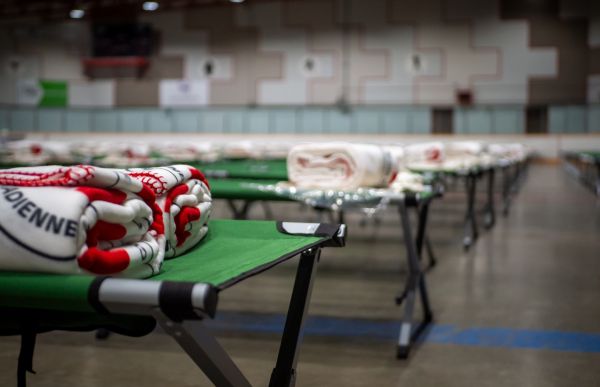 Photo: Leland MacLachlan / Canadian Red Cross
In May 2025 and the months that followed, multiple communities in Saskatchewan were evacuated because of wildfires.
We continue to work closely with various levels of government, Indigenous leadership and community partners to support those impacted by the wildfires. We are supporting individuals, families, and communities with their recovery.
Find out more:
- In-person support hours and locations
- Recovery support for individuals and families
- Recovery support for small businesses and organizations
- Helpful resources
- Canadian Red Cross response summary
Latest reports
2025 Saskatchewan Wildfires Update, as of June 30, 2026
In-person hours and locations
Our team members can provide support to individuals and households whose primary residence was impacted by the wildfires. (Your primary residence is where you live most of the time.) We can provide referrals to services and answer questions about our programs and support. You can meet with our team in person in Creighton.Creighton Sportex Lounge - 100 White Street
Hours of operation:
9:00 a.m. to 4:00 p.m. Central Time
Dates:
October 2026
- October 13 - 22
Virtual Case Management Support is available Monday to Friday between 9 a.m. and 4 p.m. Central Time, closed weekends and statutory holidays.
To book an appointment or if you have other questions you can email skrecoverysupport@redcross.ca or call 1-800-863-6582 between 10:00 a.m. and 6:00 p.m. Central Time.
Available recovery support
Personalized recovery support
We are offering personalized recovery support to individuals and families whose primary residence was impacted by the wildfires. (Your primary residence is where you live most of the time.) Our Case Management teams will work directly with you to discuss your unique needs. They will help you with your recovery and with accessing available supports.Visit our program page for more information about this support.
Support for housing repair and reconstruction
If the wildfires destroyed or caused major damage to your primary residence, we are here to support you. (Your primary residence is where you live most of the time.) We can provide referrals and information to help you understand your housing options. If you own your home, you may be eligible to receive financial assistance.Learn more about this program.
Support for small businesses and not-for-profits
This program provided financial assistance to eligible small businesses and not-for-profit organizations that were directly impacted by the wildfires.
Please note that the application period for this program closed on June 30, 2026.
Visit our program page for more information.
Grants for community organizations
We are offering funding to eligible community organizations that are helping communities recover from the wildfires.Visit our grants page for more information and find out how to apply.
Helpful resources
The resources below may help as you return home after a wildfire.
- Canadian Red Cross Guide to Wildfire Recovery: Step-by-step information on what to do when you return home after wildfires
- Home Inventory Checklist: A checklist to help document damage to your home. Insurance providers use a similar form to assess the cost to repair or replace lost or damaged items.
- Top 10 Tips for Working with Contractors: Tips to help you ask the right questions and protect your interests while working with contractors.
Emergencies affect our well-being and mental health. They can disrupt our routines and our access to social support. Emergencies happen with little warning, and recovery can seem overwhelming.
The guides below can help you and your loved ones navigate this difficult time.
- Guide to Disaster Recovery, Caregivers and Parents: Information on stress symptoms in children, coping mechanisms, and tips for caregivers and parents
- Coping with Crisis: A guide on what to look for and expect during times of increased stress and information on how to cope
- Guidebook for Wellbeing in Recovery: Information, practical tips, and worksheets on how to support yourself and others after a disaster
- Preparing for and Coping with the Effects of a Disaster or Emergency: Information on how to prepare for and take care of yourself and others when facing a disaster or emergency
During a crisis, you may feel overwhelmed or find it difficult to get through the day. Many people experience this. Help is available. If you are feeling overwhelmed, contact your local health facility or a local crisis support line.
For immediate assistance anywhere in Canada, call the Suicide Crisis Helpline at 9-8-8.
- Canadian Mental Health Association: Links to support and resources in your area.
- First Nations and Inuit Hope for Wellness Help Line: 1-855-242-3310.
- Kids Help Phone: 24-hour bilingual and anonymous phone counselling, online counselling, and referral service for children and youth
- Bell Let's Talk: A list of organizations with helpful resources.
Canadian Red Cross response summary
As part of its emergency support to people evacuated due to the wildfires in Saskatchewan, the Canadian Red Cross:
- Registered more than 16,100 people from over 6,300 households evacuated due to the wildfires in Saskatchewan.
- Welcomed people at 14 reception centres and operated three congregate shelters in Saskatoon, Regina, and Prince Albert.
- Provided mobile outreach services for people in Lloydminster, Saskatoon, Prince Albert, Regina, North Battleford, Unity and Denare Beach.
- Secured a peak of more than 1,100 hotel rooms in Saskatchewan for those who were evacuated.
- Provided food and supplies, such as cots, blankets, and pillows, to other locations upon request from community leadership.
- Supported members of Lac La Ronge Indian Band and Peter Ballantyne Cree Nation as they returned to the community. That support included prepaid cards for the Lac La Ronge Indian Band community members to support transportation needs for their return home.
Fraud Alert
Unfortunately, there are some people who may try to take advantage of those impacted by a disaster through fraudulent tactics. The Canadian Red Cross communicates only via email, phone, or in person and would never send a link through a text message for a person to click on to receive funds. We will never ask for your social insurance number, bank account information, or credit card number during your registration or to receive assistance. The Canadian Red Cross encourages people to stay informed from credible sources, such as the Government of Canada’s website for fraud prevention tips. If you suspect you have been a victim of fraudulent activity, please contact your local police authority.