

Opioid Poisoning vs. Overdose: Why Words Matter
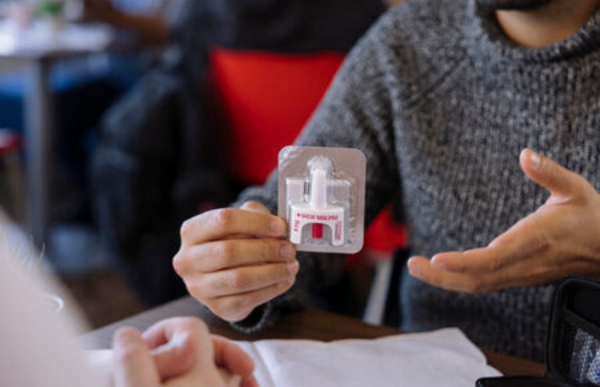
Photo: John Falcon / Canadian Red Cross
Words can shape how people think, feel, and act—especially regarding opioid poisoning. The language we use can either reduce or worsen stigma.
Stigma is a prejudice against certain people or activities. For example, when people judge, blame, or treat others as less worthy of care.
When we talk about opioid use, stigma can cause real harm. It can stop people from asking for help. It can also make others less likely to respond with care. Reducing stigma means changing people’s ideas about opioids and about people who use them. There isn’t a “type” of person who uses opioids, but there are many stereotypes that are false and harmful.
In Canada, opioid poisoning remains a serious public health issue. Between January 2016 and September 2025, Canada reported 55,032 apparent opioid toxicity deaths. That is why harm reduction matters.
Opioid poisoning is a life-threatening medical emergency that occurs when a toxic amount of an opioid overwhelms the body’s central nervous system, causing breathing to dangerously slow down or stop completely. Opioid poisoning can happen with prescribed opioids, non-prescribed opioids, or opioids mixed with other substances. It can also happen when a person does not know what a substance contains.
Many people use the term “opioid overdose.” While “overdose” is a common word, it can imply that the person made a choice to take too much. The word "overdose" can increase blame, shame and stigma.
“Opioid poisoning” focuses on what is happening in the body. It also reminds people that this is an emergency.
This shift matters because most opioid poisoning deaths are accidental. In Canada, 96% of apparent opioid toxicity deaths from January to September 2025 were accidental. Using “opioid poisoning” helps move the focus from blame to action.
Stigma can make people feel judged or unsafe. A person may hide their opioid use. They may use substances alone. They may avoid asking for help. Families and friends may also feel shame, fear, or isolation.
Health Canada notes that stigma can influence how others treat people and whether they receive support. It recommends using person-first language and avoiding hurtful words like “addict” or “junkie.” Stigma does not help people stay safe. Care, respect, and support do.
Person-first language puts the person before the condition or behaviour. It reminds us that substance use does not define a person.
Instead of saying:
- “Addict”
- “Drug user”
- “Junkie”
- “Clean” or “dirty.”
Try saying:
- “Person who uses drugs”
- “Person with substance use disorder”
- “Person in recovery”
- “Person who may be experiencing opioid poisoning”
This language is not about being perfect, it is about being respectful. The Canadian Centre on Substance Use and Addiction (CCSA) also notes that nonstigmatizing language can help people seek help and access care.
Stigma can be external or internal.
- External stigma comes from other people, systems, or organizations. It can show up in policies, comments, jokes, or unfair treatment.
- Social stigma happens when harmful ideas spread in a community. It can make people feel isolated or judged.
- Institutional stigma happens when rules or systems create barriers to care and support.
- Internal stigma happens when a person starts to believe the negative messages they hear. They may feel shame. They may expect judgment. They may stop asking for help.
Each type of stigma can make opioid poisoning more dangerous.
Changing one word will not solve the opioid crisis, but it can help create safer conversations. When we say, “opioid poisoning,” we remind people that:
- This is a health emergency
- The person needs help
- The response should be fast
- Naloxone can help reverse opioid poisoning
- Calling 911 is still important
- Blame does not save lives
Health Canada recommends using language that shows care and concern instead of judgment. It also encourages people to speak up when they hear disrespectful language.
You do not need to be an expert to talk about stigma. You can start with simple questions.Try asking:
- What words do we use when we talk about opioid poisoning?
- Could those words make someone feel judged?
- How can we speak with more care?
- What would make someone feel safe asking for help?
- How can we be ready to respond in an emergency?
In a workplace, this conversation may happen during a safety meeting. In a school or youth program, it may happen during health and safety planning. At home, it may happen with family members, teens, or caregivers. In a community group, it may happen during emergency preparedness planning.
The goal is not to shame people for using the wrong words. The goal is to learn together.
Everyone has biases, and some of them are easy to see; others are harder to notice. Take time to reflect on your own thoughts about opioid use. Ask yourself:
- What words do I use?
- Where did I learn those words?
- Do I blame people for substance use?
- Do I assume I know someone’s story?
- Would my words make someone feel safe asking for help?
These questions can feel uncomfortable; that is normal. What matters is being open to learning.
Substance use is not the same for every person. The Community Addictions Peer Support Association (CAPSA) outlines the spectrum of substance use this way:
- No use: No use of substances at all
- Beneficial: Use with positive health or social effects
- Lower risk: Occasional use with minimal health or social effects
- Problems occurring: Use that has negative impacts on people
- Substance use disorder: Diagnosable chronic medical condition
Substance use disorder is a medical condition; it is not a moral failure. People need access to support, care, and clear information. They also need to be treated with dignity.
Language matters. Action matters too. Learn what to do if someone may be experiencing opioid poisoning. The Canadian Red Cross teaches people how to recognize opioid poisoning, respond with confidence, and administer naloxone.
Anyone can learn how to help. The First Aid for Opioid Poisoning online course can be useful for:
- workplaces
- safety teams
- human resources teams
- schools
- youth programs
- parents and caregivers
- community organizations
- volunteers
- outreach workers
- public-facing staff
- people who want to help in an emergency
You do not need to be a healthcare worker to learn first aid for opioid poisoning.
Words can help save lives
The way we talk about opioid poisoning matters. When we use respectful language, we reduce shame. When we reduce shame, people may be more likely to ask for help. When people ask for help, lives can be saved.
Use person-first language, say “opioid poisoning” instead of “overdose” when you can. Speak with care and learn what to do in an emergency.
Take the Canadian Red Cross First Aid for Opioid Poisoning course. Learn how to respond with confidence. Find out where to get a naloxone kit.