

COVID-19 Operational Summary
Canadian Red Cross: COVID-19 Operational Summary
(as of September 25, 2020)| February | June |
| March | July |
| April | August |
| May | September |
| Fast Facts | |
February
- On behalf of the Government of Canada, the Canadian Red Cross procu
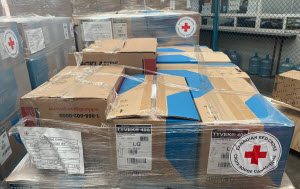 red and coordinated the delivery of personal protective equipment medical supplies for use in China as part of the initial response for coronavirus.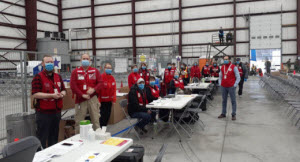
- At the request of the Government of Canada, the Red Cross starts registering and providing care and comfort to Canadian travellers in quarantine at Trenton, and later Cornwall.
- A health clinic, comprised of components from our Emergency Field Hospital, is
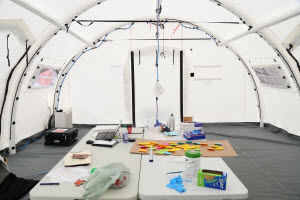 mobilized to assist with non-urgent medical needs in Trenton.
 - The Canadian Red Cross, at the request of the Government of Canada and in coordination with Embassy of Canada staff and the Japanese Red Cross, sent a team of delegates to Japan to support Canadians being treated or in isolation for COVID-19 in Japanese hospitals.
- With more Canadian travellers returning home, the Red Cross is requested to provide care and comfort at quarantine sites across the country (starting in Vancouver, Calgary, Toronto, Montreal, and later expanding to Regina, Fredericton, St. John’s, and Halifax). Volunteers provide meal delivery, wellness checks and basic personal items.
- To strengthen Canada’s capacity to respond, the Red Cross helps convene global health experts and Movement partners, including those from Italy and later China, to discuss lessons learned and best practices for responding to COVID-19.
- The Friendly Calls or Friendly Phone program is expanded in reach in
 Saskatchewan, Ontario, Quebec, New Brunswick, Nova Scotia, Newfoundland and Labrador, and Prince Edward Island. Regular check-in calls are made by Red Cross staff and volunteers to isolated individuals to help provide comfort and assistance, emotional support, guidance and referrals for a wide range of community support services.
 - The Emergency Management team in Ontario has been working with communities across the province to provide thousands of cots, blankets, pillows
 and hygiene kits to help communities prepare to respond to COVID-19.
 - On behalf of the Government of Quebec, the Canadian Red Cross is assisting with the registration and distribution of financial assistance through the Temporary Aid for Workers program for residents of Quebec.
- At the request of the Government of Saskatchewan, the Red Cross is augmenting support to those most vulnerable who need to self isolate but do not have the means to do so.
- In partnership with the City of Toronto, and ot
her organizations, the Canadian Red Cross is working to address the issue of food security and access during the COVID-19 pandemic through the Toronto Emergency Food Assistance program.
- In support of the Governments of New Brunswick, Newfoundland and Labrador, and Prince Edward Island, the Canadian Red Cross is providing virtual support for individuals and families in self-isolation including information related to self-isolation, or support in accessing community resources.
- In support of the Government of New Brunswick, the Canadian Red Cross is providing financial assistance to workers or self-employed individuals residing in New Brunswick who lost their job due to the COVID-19 state of emergency.
- On behalf of the Government of Canada’s First Nations and Inuit Health Branch, the Red Cross procured personal protective equipment, cots, and cleaning supplies to distribute to every First Nation in Manitoba interested in receiving the items. The supplies were intended to be used for self-isolation centres in the communities.
- The Canadian Red Cross joins a province-wide Manitoba First Nations Pandemic Response Coordination Team. Through this group, the Red Cross is providing support to the leadership of First Nations on pandemic response related issues and access to Preventing Disease Transmission training, as well as Psychological First Aid training to Manitoba First Nations members.
- At the request of the British Columbia Ministry of Health, components of the Red Cross Emergency Field Hospital – along with a team of technical specialists – are mobilized in Vancouver to augment health infrastructure in the Vancouver Coastal Health region in response to the pandemic.
- In Quebec, Canadian Red Cross provided compone
nts of its emergency field hospital to increase hospital capacity in the areas of Dorval, Lachine and LaSalle served by the Montréal West Island CIUSSS.
- Red Cross specialists in epidemic prevention and control are sent to help stop outbreaks in long-term health centres in Quebec through rapid assessments, epidemic prevention control protocols, and training.
- Building off a long history working alongside Indigenous communities, the Canadian Red Cross provides support to Indigenous communities across Canada as they respond to COVID-19.
- In Prince Edward Island, the Canadian Red Cross registered the names and contact details of PEI residents applying for the COVID-19 Special Situation Fund.
- Canadian Red Cross released the first results of a Leger study showing the pandemic’s impact on Canadians, in particular young adults.
- In support of the Government of Nova Scotia, the Canadian Red Cross provides financial assistance to Nova Scotians who are laid off or out of work because of COVID-19 and did not qualify for employment insurance.
- The Canadian Red Cross is supporting the Government of Nova Scotia by providing COVID-19-specific information or assistance accessing community resources.
- In partnership with the City of Ottawa, Red Cross is going door-to-door to determine how isolated individuals are coping, and to ensure their immediate needs are met, which includes food and medicine supplies.
- In support of the Government of Nova Scotia and the Northwood Manor long-term care facility in Halifax, the Canadian Red Cross provided six of its Continuing Care Assistants, power-assisted hospital beds and other health equipment for an offsite recovery ward where Northwood residents recovering from COVID-19 could be safely isolated from other residents and staff.
- In Alberta, when severe flooding occurred in Fort McMurray and its surrounding area, including Mackenzie County, the Canadian Red Cross followed established COVID-19 public health protocols to help meet the needs of more than 13,000 affected people.
At the request of the Alberta Ministry of Health, the Canadian Red Cross increased the capacity of its Health Equipment Loan Program during the pandemic to provide items, such as walkers, wheelchairs and IV poles, to help more Albertans continue their safe recovery at home after being discharged from hospital and health facilities.
- At the request of the Ontario Community Support Association, the Red Cross has been supporting eligible seniors and individuals with physical disabilities to access food and/or essential needs service delivery.
- Working with the Municipality of Cochrane, Ontario, the Red Cross is coordinating the provision of essential services, including groceries and medications, to low-income individuals who have tested positive for COVID-19 or are awaiting test results.
- At the request of the City of Montreal, the Red Cross is distributing food to people experiencing homelessness and is coordinating temporary homeless shelters to prevent the spread of COVID-19 at various outdoors sites.
- Thanks to the Government of Canada, the Red Cross provides emergency support in the form of a granting program, as well as personal protective equipment and training, helping community organizations to continue pr
oviding vital frontline services.
- Indigenous communities continue taking action to safeguard themselves from the pandemic’s impacts and risks. Supported by Indigenous Services Canada, the Red Cross works alongside Indigenous communities to launch a virtual Help Desk to provide Indigenous leadership with key health guidance related to the pandemic, as well as community wellness and protection.
- Canadian Red Cross releases the second results of the Leger pandemic study, reaffirming concern for vulnerable seniors during the pandemic.
- The Canadian Red Cross is assisting the New Brunswick Departments of Justice and Public Safety and the Office of the Chief Medical Officer of Health in processing applications for compassionate entry into New Brunswick.
- With support from Bell’s Let’s Talk program, the Red Cross further expands its Friendly Calls program in Ontario and Atlantic Canada. Red Cross staff and volunteers help to provide comfort and assistance, emotional support, guidance and referrals to isolated individuals.
- In support of the Government of Québec, the Red Cross is mobilized to recruit and train a surge workforce of staff and volunteers to work in long-term care homes identified by the healthcare network.
- Working in support of provincial and local health authorities in Ontario’s Windsor-Essex area, the Red Cross is providing comfort and care services to migrant workers required to self-isolate in designated facilities. Red Cross services include registration and personal services, including hygiene and comfort items, and meal delivery.
- Canadian Red Cross releases the third results of the Leger pandemic study, showing the pandemic affecting Canadians’ consumption of alcohol and cannabis.
- The first Red Cross team begins to work in long-term care facilities in Quebec.
- In Alberta, Wellness Check-in Calls for Seniorsis launched to listen to people’s needs, provide information, offer referrals, and check on the compatibility of items received from the Health Equipment Loan Program.
- In Ontario, operations to support migrant workers continue.
- In Quebec, a workforce of more than 900 trained individuals continues to provide critical support to long-term care centres.
- Canadian Red Cross releases the fourth and final results of the Leger pandemic study, showing that vulnerable seniors are in need of more support
- The COVID-19 pandemic continues, the Red Cross responds to evolving needs and prepares for those that lie ahead.
- 3,000+ Canadian travellers supported during their quarantine or self-isolation period
- 200 Indigenous communities across the country supported through the Indigenous Help Desk
- 3 deployments of field hospital components to support health authorities
- 24,700+ friendly phone calls made to vulnerable individuals and families across the country
- 6,100+ Canadians provided psychosocial support as well as health, safety and wellness tips
- 24,000+ food baskets delivered to seniors in need across Toronto
- 6,200+ wellness check-ins for vulnerable individuals in Ottawa
- 900+ projects through eligible organizations funded to support activities and services for people or families in need
- 67,000+ pieces of Personal Protective Equipment provided to community organizations
- 110 long-term care facilities, residences and rehabilitation centres in Quebec supported through Epidemic Prevention and Control
- 9,600+ individuals in Quebec received training, such as use of Personal Protective Equipment and Epidemic Prevention and Control