

A regular day on the ice at the Oshawa Curling Club became a cardiac emergency in seconds. Natalia Lebedeva recognized the signs of cardiac arrest and began CPR while other curlers called 911 and brought an automated external defibrillator (AED). Their teamwork helped save a life. Read Natalia’s story and why she’s become a passionate advocate for CPR training.
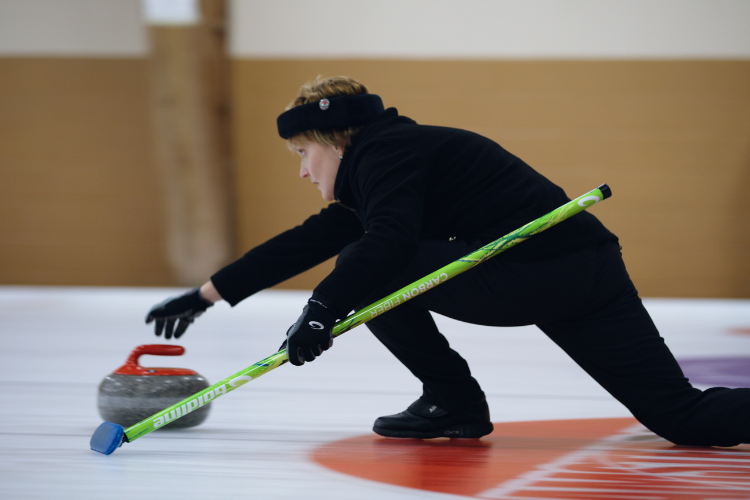
Photo: Canadian Red Cross
Recognizing cardiac arrest at the Oshawa Curling Club
It was a Sunday morning in December 2025 at the Oshawa Curling Club. The sheets of ice were lively with games and mingling, and new member Natalia Lebedeva had just delivered her rock.
Getting up from the ice, she heard someone ask in a worried tone, “Is he OK?” Turning, she saw a man lying unconscious on the ice next to hers.
While curling ice isn’t generally slippery, falls can still happen. Natalia wondered if he had slipped and hit his head. She immediately went over, informed the group that she knew CPR (cardiopulmonary resuscitation) and asked what happened.
Just a few months earlier, in the summer of 2025, Natalia took a CPR training with a group of cottagers. In remote locations, emergency help can be delayed, and the community realized they needed to be ready to respond while waiting for paramedics. Natalia had no idea she would be called on to use her skills so soon.
They explained that the man delivered his rock as normal, but instead of getting back up, he lay down quietly. His collapse raised Natalia’s concern about a cardiac emergency.
An adult who is unresponsive and not breathing, or gasping, may be in cardiac arrest.
Natalia knelt next to the unconscious man and checked his breathing – he was struggling and gasping for air. His unresponsiveness and abnormal breathing reinforced her concern that he was experiencing cardiac arrest and prompted her to act. There’s no time to waste in a cardiac emergency: CPR was needed right away.
Though usually shy and quiet, and new to the curling club, Natalia didn’t hesitate: She began performing chest compressions and rescue breaths.
Doing chest compressions keeps blood circulating to the brain and other vital organs when cardiac arrest has caused the heart to stop beating. Watch a video on how to perform chest compressions.
Curling is a team sport, so the club members had practice working together and came to the man’s aid: People called 911 and the dispatcher reminded them to get an AED, so someone rushed off to find one. Knowing that chest compressions would quickly become tiring, Natalia asked if anyone else was trained in CPR. Someone came forward to do two-person CPR with her, and the volunteers worked together to provide care.
CPR, teamwork, and AED use
After a few minutes of chest compressions and rescue breaths, Natalia and the other volunteers noticed changes in the man’s condition: “He stopped making sounds, he became completely still, he turned blue,” recalls Natalia.
For her, this was the hardest moment. Without training, she thinks she would have given up hope and stopped giving CPR. But her training told her to continue: “I had enough knowledge to know he was in clinical death. I knew my job was to continue to give CPR.”
You might worry the person is beyond help, but they may only be clinically dead.
Clinical death occurs when a person’s breathing and heartbeat stop, but it’s reversible with immediate intervention. That’s because permanent brain damage does not begin until the person has been without oxygen for 4 to 6 minutes. After 8 to 10 minutes without oxygen, biological death occurs and is irreversible.
CPR and AED use immediately after cardiac arrest increase survival chances while waiting for emergency responders.
Natalia told those around her to remain calm and continued CPR.
The person who went in search of the AED found it, brought it to Natalia and turned it on.
An AED analyzes the heart’s rhythm and advises whether a shock is needed. When turned on, the AED gives audio instructions for rescuers to follow.
Following the AED instructions, they put the AED pads on the man’s chest. Natalia paused chest compressions while the AED analyzed his heart’s rhythm. The AED recommended a shock.
Everyone stood back to ensure they weren’t touching the man, then delivered the shock. Natalia resumed CPR. Almost right away, signs of life started to return: the man regained a more normal colour, he made sounds and opened his eyes.
Relieved, Natalia stopped CPR and everyone relaxed, ready to call it a job well-done. “That’s where we made a mistake,” says Natalia, remembering how they removed the AED pads. Luckily, she stayed by the man’s side, trying to talk to him. Her close monitoring meant that she noticed when he became unconscious again.
Natalia quickly yelled for everyone to come back and replace the AED pads. The machine didn’t advise a shock this time, so she continued CPR until the paramedics came.
Even if signs of life return, leave the AED turned on and its pads attached. Continue to follow its prompts and monitor the person. If they become unresponsive again and are not breathing normally, resume CPR.
Within minutes of the paramedics arriving, the man began to respond and was soon trying to sit up. He was taken to the hospital for further care and, as his family later reported, doing well.
Natalia and the other club members provided critical care during the 10 to 12 minutes it took emergency responders to arrive. Police later confirmed that their bystander intervention was key to the man’s survival, reinforcing the vital role that immediate action plays in the first minutes of a cardiac emergency.
Bringing workplace first aid training to the office
After paramedics took the man to the hospital, curling was cancelled for the day, and everyone left. Natalia had felt calm and methodical during the emergency, but once home, the emotional toll of the experience hit her. She didn’t feel ready to talk about what she’d been through, and her body was so stressed and restless that all she could think to do was take herself for a run. She ran 7 km.
The next day she went to work and asked if the office had an AED and workplace first aid training. They didn’t. Considering how important her CPR training and AED use were to the man’s survival at the curling club, Natalia knew she couldn’t ignore this. The experience had changed her idea of what makes a safe environment: an easily accessible AED and people who know how to use it.
It took time to process how upsetting it was to be in a life-and-death situation, even with its positive outcome. Eventually Natalia spoke about her experience and went to her company’s HR team and CEO to explain how important an on-site AED is to workplace safety. The company took her story seriously and agreed to pay for AEDs for the 150-person office and to train 16 staff members in first aid.
Natalia was among the employees who received the first round of comprehensive first aid training, building on the skills she had already used during the rescue. Sharing her experience with her colleagues helped spark greater interest and commitment to preparedness in her workplace. Though she hopes there won’t be a “next time,” expanding her training has made her more prepared and confident in her ability to respond. Thanks to her advocacy, she’s no longer the only one.
Why Natalia encourages others to learn CPR
When Natalia opened the email announcing she was nominated for a Canadian Red Cross Rescuer Award, she was surprised. She didn’t feel her actions were heroic; they were just very necessary. As someone with CPR training, she felt responsible and grateful she had the ability and community support to help. “We all hope we’ll never face this situation, but an emergency doesn’t ask us if we’re ready or not, so we must be prepared so that if the moment comes, we can face it.”
Everyone reacts to the stress of an emergency differently, and some people are afraid to respond. For Natalia, that’s where training really helped:
“You can overcome the reaction of fear, like fear of doing something wrong, of hurting the person…Many people are capable of doing their best when situations like this arise, but they just need a little bit of help and skills. Take the course. If you trained years ago, take it again. Recent training makes actions feel familiar, gives confidence to begin [CPR] and gives enough courage to continue.” In a cardiac emergency, any CPR is better than no CPR.
Natalia says human beings have survived this long because of our willingness to help each other: “We’re not great at running, we don’t have night vision,” she laughs, “but we can cooperate, work together and help each other. CPR can be frightening – chest compressions, rescue breaths, an unresponsive person – but using skills to save someone’s chance of living: this is something that is a real superpower.”
Ready to hone your CPR superpower? Explore Which course should I take? and download the First Aid app!
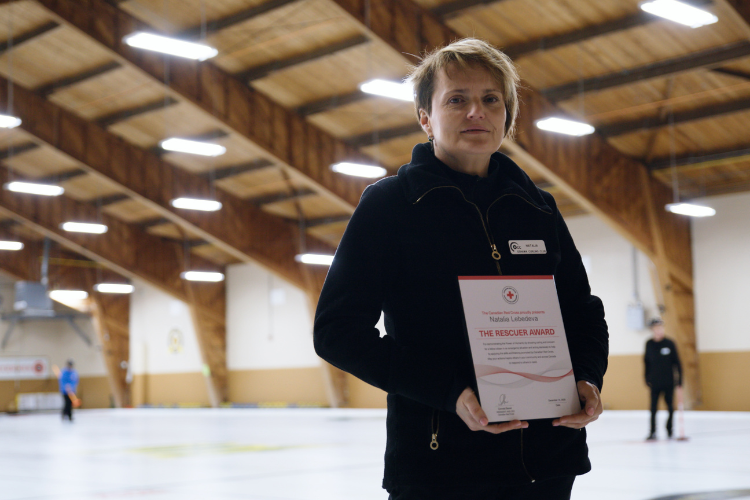
Photo: Canadian Red Cross
Nominate them for a Canadian Red Cross Rescuer Award, which honours individuals like Natalia who step up in critical moments to provide life-saving aid. These awards are a testament to ordinary people's bravery and quick thinking in extraordinary circumstances.
Related articles
Breaking ribs and other CPR fears
Debunking myths around performing CPR - Canadian Red Cross
How CPR differs from what you see in movies - Canadian Red Cross