

On June 24, 2026, two of the strongest earthquakes this century struck Venezuela. Three months later, daily life remains unsettled for many families. More than nine million people were affected, thousands of people are still displaced, and damaged homes, hospitals, roads and water systems continue to affect how people access essential services. In La Guaira, one of the hardest-hit areas, about 95 percent of infrastructure was impacted by the earthquakes.
As the response evolves, health needs are changing but not diminishing. People continue to cope with displacement, loss, and uncertainty. Primary healthcare, mental health and psychosocial support, and continued care for people with chronic conditions have become increasingly important. Damage to more than 40 hospitals and 100 primary health care facilities has made continuing care more difficult to access. Three months of limited resources is taking a toll on people who rely on regular treatment and medication. With unreliable electricity, maternal and neonatal care also continues to be at risk.
Keeping healthcare within reach
In the first days after the earthquakes, the Venezuelan Red Cross field hospital in La Guaira treated hundreds of trauma cases. Today, the field hospital is increasingly providing primary care and psychosocial support, while people living with chronic conditions continue to need reliable access to medication and treatment. Canadian Red Cross humanitarian expert, Maria Munoz-Bertrand, supported the operation on the ground as part of the IFRC's team.
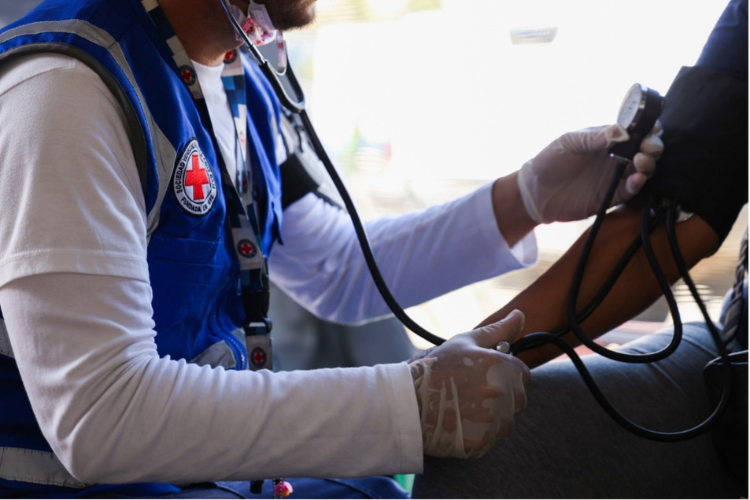
Photo: Venezuelan Red Cross
“Reliable access to healthcare continues to be a top priority in Venezuela. When people can’t access the kind of care they need after a disaster, urgent health needs can quickly spiral out of control,” said Maria.
The health response expanded as needs changed. The IFRC, in partnership with the Spanish Red Cross, sent and set up an additional clinic to support the existing Venezuelan Red Cross field hospital. It provides primary health care services to thousands of people, as well as maternal and infant care, vaccinations, and mental and psychosocial support.
During a recent visit to La Guaira, Juliana Bravo, Canadian Red Cross Head of Region for the Americas, reflected on seeing the response first-hand:
A global network behind local response
The IFRC and Venezuelan Red Cross have remained at the forefront of the operation, complemented by support from across the Red Cross Red Crescent Movement. Thanks to contributions from the Government of Canada and donors, the Canadian Red Cross has been able to support the Red Cross response in Venezuela from the beginning. The collaboration delivered 5,700 emergency relief items, which arrived in Venezuela 48 hours after the earthquake’s impact. Medical kits were also sent later in the response, containing medicines, medical supplies, family planning supplies and treatments for chronic illnesses. Four Canadian Red Cross humanitarian experts have been mobilized to support the Venezuela earthquakes response.
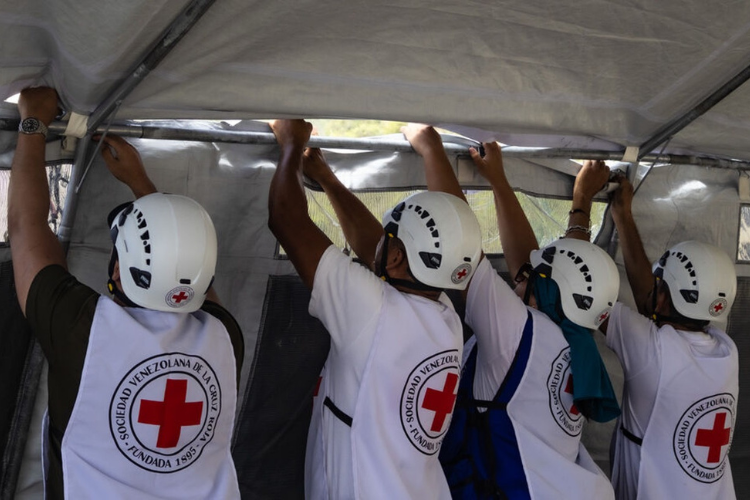
Photo: Venezuelan Red Cross
Through close cooperation with Red Cross partners, vital relief items were able to move through the wider network to reach Venezuela as quickly as possible. We worked with the Portuguese Red Cross to mobilize emergency relief items, including blankets, bedding materials and hygiene kits. We also provided funds to the Mexican Red Cross and Colombian Red Cross, supporting search and rescue, as well as healthcare, in the days and weeks after the earthquake.
Standing with communities through response and recovery
Kelsey Lemon, Vice President, International Cooperation at the Canadian Red Cross, highlighted how working together can better support the communities throughout the response and recovery after visiting Venezuela herself:
“Venezuela has a long road to recovery. But when we coordinate closely and act collectively, guided by local priorities and local expertise, we can make a real difference for people who have lost so much.”
Three months on, the priority remains ensuring continued access to the essential services people rely on every day, including healthcare, safe water and sanitation, and care for chronic health conditions.
For communities affected by the earthquakes, the road ahead will take time. The Red Cross will continue to stand alongside communities through response and recovery, adapting its support to local priorities and the needs people identify as they rebuild.
People in Canada wishing to help are encouraged to make a donation to the Canadian Red Cross Venezuela Earthquakes Appeal.