

Why Are People with Breasts Less Likely to Receive CPR?
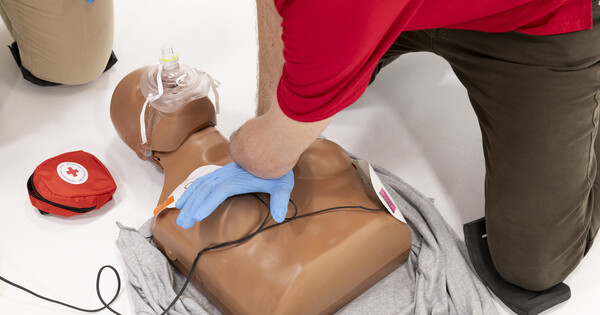
Photo: AV Unit / Canadian Red Cross
Every second counts in a cardiac emergency. But research shows that people do not receive equal treatment when it comes to lifesaving CPR (Cardiopulmonary Resuscitation). People with breasts are less likely to get bystander CPR than those without breasts. This hesitation can make a big difference.
In this blog, we’ll explore why this happens, what the research says, and how we can all break down barriers to make sure anyone can receive CPR when they need it.
The Problem: Hesitation in a Life-or-Death Moment
When someone’s heart suddenly stops, every second counts. Survival chances drop by about 10% for every minute without CPR. Immediate chest compressions, combined with the use of an AED (Automated External Defibrillator), can double or triple survival rates.
Studies show that people with breasts often do not get CPR from bystanders as quickly or at all. This is compared to people without breasts.
Reasons why there's a gap*:
- Fear of inappropriate touching: Rescuers may worry their hands will be in the wrong place.
- Fear of accusations: Some people hesitate, worried they could be misunderstood.
- Fear of causing injury: Many think chest compressions could “hurt” a person with breasts more.
But not acting is far more dangerous. These hesitations mean people with breasts often don’t get CPR as quickly, or at all. That hesitation can lower survival rates.
"Many people hesitate because they’re afraid of touching a person’s chest or being accused of doing something inappropriate. This fear can cause deadly delays. If you ever need to do CPR, speak up and be clear about what you’re doing. Counting out loud and explaining your actions helps everyone around understand that you’re performing a lifesaving skill.” - Kristy Poirier, Red Cross First Aid Master Instructor Trainer and owner of First Aid & Safety Training Services Inc. in Edmonton, Alberta.
The Reality: CPR Works for Everyone
The facts are clear:- Every minute counts: Without CPR, survival rates for cardiac arrest drop by approximately 10% per minute. Immediate action is critical to improving survival outcomes.
- Immediate CPR can double or triple the chance of survival.
- CPR plus defibrillation is key: Immediate CPR combined with an AED result in two to three times higher survival rates following cardiac arrest.
- Bystander CPR is crucial for survival: Receiving bystander CPR almost doubles the odds of survival in out-of-hospital cardiac arrest. The placement of hands for CPR is always the same: in the center of the chest. This guideline applies to all people, regardless of body type.
The placement of hands for CPR is always the same: in the center of the chest. This guideline applies to all people, regardless of body type.
“Remember: brain damage can happen in as little as 4 minutes without oxygen. The sooner CPR starts, the better the person’s chance of survival. Every second really does count!” - Kristy Poirier, Red Cross First Aid Master Instructor Trainer and owner of First Aid & Safety Training Services Inc. in Edmonton, Alberta.
What We Can Do: Break the Barriers
It’s time to change the way we think about CPR. Here’s how:- Get Trained: Enroll in a Canadian Red Cross First Aid and CPR course to gain hands-on practice and build your confidence. Plus, get a CPR certification for your records.
- Remember the Facts: CPR saves lives. Worrying about appearances should never come before action.
- Talk About It: Share these barriers openly so more people know hesitation exists, and why it needs to stop.
- Normalize Preparedness: Whether it’s in schools, gyms, or workplaces, make CPR training the norm.
Key Takeaway
Anyone can save a life. Whether a person has breasts or not should never determine whether they receive CPR. With training, confidence, and awareness, we can reduce hesitation. This way, everyone has a better chance of surviving a cardiac emergency.
(*) Perman SM, Shelton SK, Knoepke C, et al. Public Perceptions on Why Women Receive Less Bystander Cardiopulmonary Resuscitation Than Men in Out-ofHospital Cardiac Arrest. Circulation. 2019;139(8):1060-1068. doi:10.1161/CIRCULATIONAHA.118.037692.