

First Aid in Canada: Emergency Tips for Newcomers
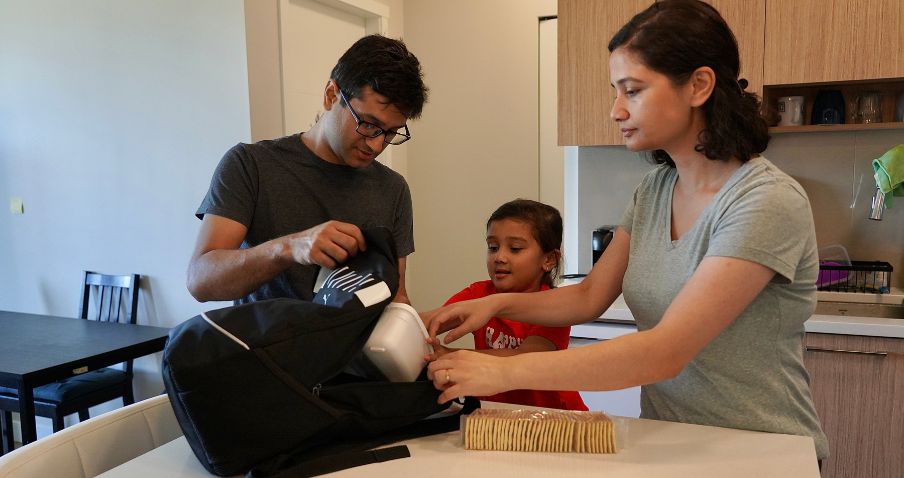 Photo: Gurpreet Somal / Canadian Red Cross
Moving to a new country comes with many firsts. You may be learning a new city, a new school system, a new job, or a new health care system.
One important thing to learn is how to get help in an emergency.
In Canada, first aid and emergency preparedness can help you protect yourself, your family, and your community. You do not need to know everything at once. You can start with a few simple steps.
This guide explains basic first aid and emergency preparedness; it does not replace official first aid training. If there is an emergency and someone needs help right away, call 911 or your local emergency number.
World First Aid Day 2026 focuses on First Aid in Migration Contexts. This theme highlights the role of first aid in supporting migrants, displaced people, newcomers, and the communities that welcome them. In 2024, there were an estimated 304 million international migrants worldwide, showing why first aid education should be clear, practical, and accessible across languages and cultures.
How to identify an emergency
Sometimes, it's easy to see when an emergency is happening. Emergencies around the world often look quite similar. However, if you're new to Canada, you might feel unsure about your instincts. To help you out, we've put together some examples to guide your judgment in assessing someone who may be sick or injured. Once you receive first aid training, you'll feel more confident in identifying these situations. Always trust your instincts, and if you're unsure, don't hesitate to make the call for help if you think there might be an emergency.For instance, if you hear someone screaming or calling for help, notice a strange smell, see someone bleeding heavily, or spot someone lying still on the ground, these are clear signs that immediate action is needed. However, sometimes, emergencies can be less obvious. You might notice slight changes in a person's usual appearance or behaviour, or it might suddenly be unusually quiet around them. Here are some common signs that could indicate an emergency:
- Screaming, moaning, shouting, or calls for help
- Sudden loud noises such as breaking glass, clashing metal, or screeching tires
- A change in the sound made by machinery or equipment
- An unusual silence
- A stopped vehicle on the roadside or a car that has run off the road
- Downed electrical wires
- Sparks, smoke, or fire
- A person who suddenly collapses or is lying motionless
- Signs or symptoms of illness or injury, such as profuse sweating for no apparent reason or an uncharacteristic skin colour
- A foul or unusually strong chemical odour
- The smell of smoke
- The smell of gas
- An unrecognizable odour
- An inappropriate odour (e.g., a sickly-sweet odour on a person's breath
- Confusion in a person who is normally alert
- Unusual drowsiness
- Personality or mood changes (e.g., agitation in a person who is normally calm)
Can you get in trouble for helping someone in Canada?
In Canada, you generally will not get in trouble for helping someone in an emergency. In many provinces and territories, Good Samaritan laws protect people who voluntarily help in an emergency, as long as they act reasonably and are not grossly negligent.
First aid tips for newcomers in Canada
Emergency responders need to know where to go. Learn how to say or find:
- Your home address
- Your apartment or unit number
- Your nearest main street
- Your workplace or school address
- Your child's daycare or school address
- If you are outside, look for signs, buildings, street names, or landmarks.
At the same time, understanding the risks in your community will help you build an emergency plan for you and your family.
Save important phone numbers in your phone. You may want to include:
- A trusted family member
- A friend or neighbour
- Your child's school or daycare
- Your doctor or clinic
- Your workplace contact
- Include your address, everyone's date of birth, health card numbers, medical conditions, allergies, and prescriptions and dosages.
- List the names and phone numbers of your doctors.
- Post the numbers for the police, fire department, emergency medical services (EMS), and poison centre near every phone in your home, and save them in your mobile phone's contacts list.
- If you have a chronic medical condition like diabetes, epilepsy, or allergies, it's wise to wear a medical identification product. This way, emergency medical services (EMS) can be alerted to your condition if you're unable to communicate it yourself. You can find a suitable tag on our eShop.
What should be in a basic first aid kit? A first aid kit should be easy to find and easy to carry. Learn what a basic kit may include. Check your kit often. Replace expired or used items.
Make sure to review and practice the first aid skills you learn, so you feel confident and prepared to help in an emergency. If you haven't taken a first aid course yet, look for one in your area. A course can help you learn how to:
- Check if a scene is safe
- Call for help
- Give CPR
- Use an automated external defibrillator, also called an AED
- Help someone who is choking
- Control bleeding
- Care for burns, falls, and other injuries
How to get emergency help in Canada?
Call 911 in Canada only when you are experiencing or witnessing an immediate life-or-death emergency that requires urgent assistance from police, fire, or paramedic services.
Common scenarios that warrant a 911 call include:
- Medical emergencies: Signs of a heart attack (such as chest pain), stroke symptoms, severe bleeding, or trouble breathing.
- Active fires: Smoke, visible fire, or an active carbon monoxide alarm.
- Crimes in progress: Break-ins, assaults, dangerous driving (like suspected impaired driving), or witnessing a serious traffic collision with injuries.
Most communities are served by the emergency telephone number 911. However, if your area doesn't use a 911 system, it's a good idea to look up the emergency contact numbers for your local police department, fire department, and Emergency Medical Services (EMS) in your phone directory or online. Don't forget to include the national poison centre phone number 1-844 POISON-X (1-844-764-7669) or if you are in Quebec the Québec Poison Control Centre at 1 800 463 5060 . Make sure everyone in your household knows how and when to use these numbers effectively.
Emergencies can feel more stressful when you are worried about language. If you call 911 or your local emergency number, say the language you speak if you can. For example:
- "Spanish"
- "Arabic"
- "Mandarin"
- "Punjabi"
- "I need an interpreter."
Many emergency systems can connect callers with interpretation services. Availability can vary by location, so the most important step is still to call 911 or your local emergency number in an emergency and stay on the line. For example, E-Comm, which handles emergency communications in many parts of British Columbia, says it can access 24-hour interpretation in more than 200 languages.
For newcomers to Canada, learning first aid is also a way to build confidence, safety, and connection. You can help protect your family. You can support your neighbours. You can be ready when it matters most.
First aid saves lives. Take one step today to be prepared.