

In the past year, I’ve been to the Middle East region three times. Twice to visit Israel and the occupied Palestinian territory and, most recently in January, to Jordan, Syria and Lebanon.
Red Cross Red Crescent National Societies in the region have been dealing with the impacts of overlapping humanitarian crises for many years. Yet each time I visit, I’m struck by the dedication and professionalism of the local Red Cross Red Crescent teams.
Despite all of the ongoing challenges, including being impacted themselves, they never waver in their commitment to helping.
Syria Begins the Process of Rebuilding
This was my first time in Syria since 2022. At that time, the country had been dealing with more than 10 years of conflict. While there are still outbreaks of violence in parts of the country, Syria has changed dramatically. The change in government at the end of 2024 has brought moderate stability for many in Syria. Aleppo, a city in northern Syria recently had 24 hours of electricity for the first time in 14 years. Some towns that saw almost their entire population leave during the height of the conflict have had people return. Conflict and intermittent violence still impact many though.
How the Syrian Arab Red Crescent is Providing Support
For the Syrian Arab Red Crescent (SARC), this means adjusting their focus, while also looking inward. In a meeting with Syrian Arab Red Crescent leadership, President Dr. Hazem Bakleh tells me, “After 15 years of war, SARC is tired.” The organization’s more than 11,000 volunteers have spent the last 15 years responding to the impacts of a devastating conflict that saw more than 12 million people displaced and a shocking disregard for the rules of war. 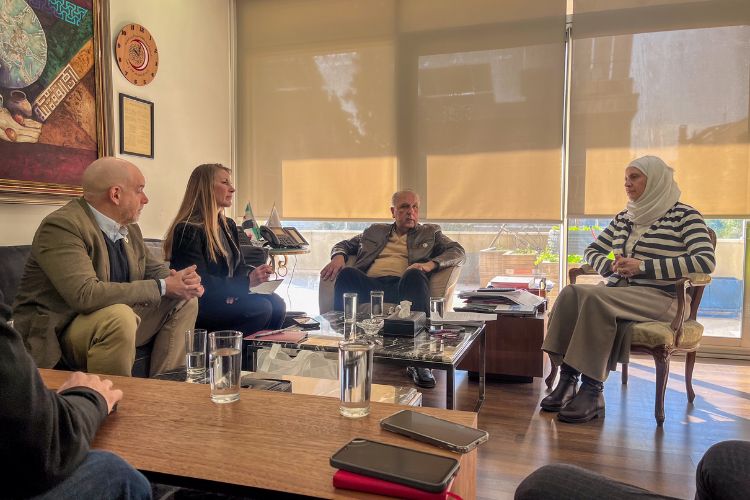
Photo: Stephanie Murphy / Canadian Red Cross
Syrian Arab Red Crescent teams are continuing to face immense challenges, including damaged infrastructure across the country, ongoing violence and insecurity, and a lack of resources. Syria is also vulnerable to natural disasters, with the devastating impacts of the 2023 earthquake compounding the humanitarian needs across the country. Last summer, Syrian Arab Red Crescent teams supported people impacted by forest fires in Latakia, a province in northwestern Syria, while also supporting others in southern Syria impacted by an escalation of hostilities.
The organization is looking ahead to how they can best support people as they work to recovery from so many years of conflict. In Al-Huweija, a village in the rural Hama region of Syria, close to 1,000 families have returned after being displaced by the conflict for many years.
The village was almost completely destroyed and lacked housing and basic infrastructure for returning residents. Syrian Arab Red Crescent worked closely with the town to discuss what was needed, providing access to safe, clean water, setting up a mobile clinic and helping to rehabilitate the school.
Access to Affordable Healthcare in Syria
During my visit, I had the opportunity to visit Al Zahera Hospital in rural Damascus, where the Syrian Arab Red Crescent helps fund affordable healthcare services for people who might not otherwise be able to access them. The Canadian Red Cross has supported obstetrics, pediatrics, and internal medicine at the hospital. While visiting the hospital, I met Marah, a baby who had been born earlier that day. Al Zahera Hospital is just one of many hospitals, primary healthcare centres, and mobile clinics that the Syrian Arab Red Crescent supports to help ensure people across the country can get the healthcare they need.
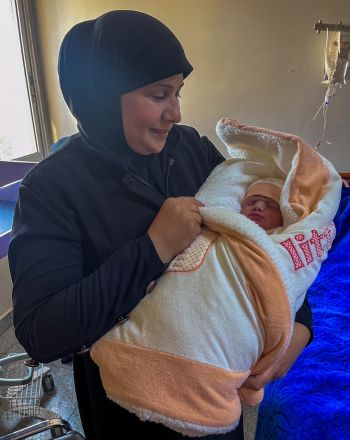
Photo: Stephanie Murphy / Canadian Red Cross
I also visited Sayeda Zainab Primary Health Centre, just outside the city of Damascus. The centre sees about 250 patients per day and provides essential primary healthcare services that includes internal medicine, pediatrics, gynecology, orthopedics, and mental health.
The centre serves a large area, including many people who are internally displaced. Like Al Zahera hospital, the centre helps make quality healthcare services accessible for people. Chronic conditions such as diabetes and hypertension are common, while the centre also does cancer screening and provides dental services. While emergent health needs tend to take priority during conflict, care for conditions such as these are vital to ensuring people’s overall health.
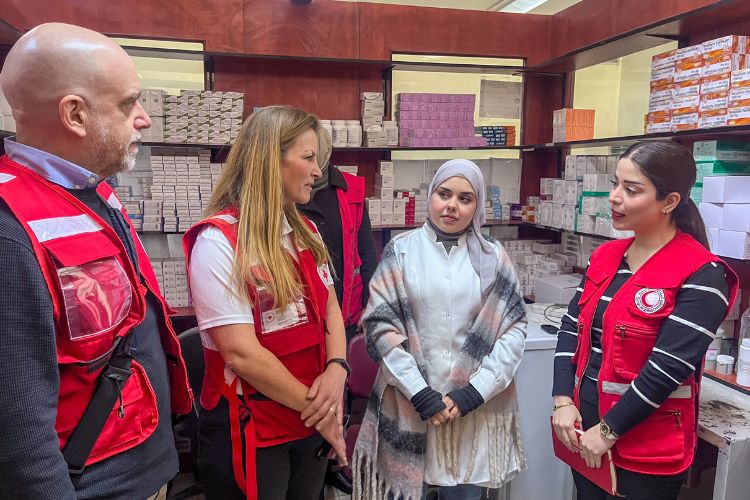
Photo: Stephanie Murphy / Canadian Red Cross
Local, community-based work such as this is what sets the Syrian Arab Red Crescent apart. As a local organization, volunteers know and understand the communities in which they’re working, which is essential in helping people rebuild. They’ve spent the last 15 years impacted by conflict and understand the needs it creates. As people across Syria try to move forward, the Syrian Arab Red Crescent’s experience, dedication, and local knowledge will be needed more than ever.
Vital Healthcare and Emergency Services in Lebanon
Across the border in Lebanon, the same is true of the Lebanese Red Cross. As Lebanon continues to deal with a complex humanitarian crisis, the Lebanese Red Cross has never wavered in their dedication to providing vital services to the population.In addition to dealing with the country’s economic collapse, political instability, and the lingering impacts of the 2020 Port of Beirut explosion, the escalation of conflict in the fall of 2024 and ongoing intermittent violence have only further deteriorated the humanitarian situation in Lebanon.
The Canadian Red Cross has a long history of working with the Lebanese Red Cross and supporting their work. We know that when humanitarian aid is needed in Lebanon that the Lebanese Red Cross is the best placed partner to provide support. Georges Keattaneh, the Secretary General of the Lebanese Red Cross, tells me in a meeting that his teams share a “common language with local communities.” With over 12,000 volunteers, the Lebanese Red Cross is trusted across the country.
This blog was written prior to the current escalation of conflict in the Middle East, which has further compounded the humanitarian needs in Lebanon. To learn more about how Lebanese Red Cross is responding, visit our Lebanon page.
Red Cross Support to Healthcare Centres in Lebanon
One of the essential pieces of support the Lebanese Red Cross provides is primary healthcare through both Primary Healthcare Centres and Mobile Medical Units. I had the opportunity to visit one of the Primary Healthcare Centres in Jal el Dib, just outside of Beirut. It is one of 37 such centres the Lebanese Red Cross operates. The centres provide any of the basic healthcare supports that an individual or family would need to stay healthy – consultation, sexual and reproductive health services, vaccinations, prescriptions, and mental health support. 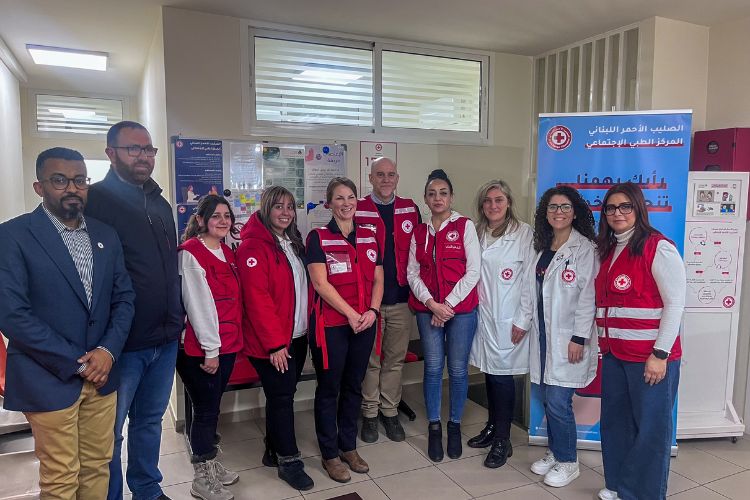
Photo: Stephanie Murphy / Canadian Red Cross
Hassan Saad, a director with the Lebanese Red Cross, tells us that Lebanon’s economic collapse has led more people to visit the centres. Between 2024 and 2025, the number of visits to Primary Healthcare Centres increased from 369,000 to 422,000, showing how important access to low-cost healthcare continues to be. The Canadian Red Cross is proud to support five of these centres.
I also spoke with social worker Marie-Helene El Asmar, who oversees the centre’s mental health programming. Marie-Helene and her team not only support mental health at the centre but also do community outreach activities to local schools. That day, she had done a presentation at a school about the flu and how children can protect themselves. They also operate a child-friendly space to help provide a safe environment for children impacted by the ongoing conflict, helping children learn how to better express their emotions during difficult times like this.
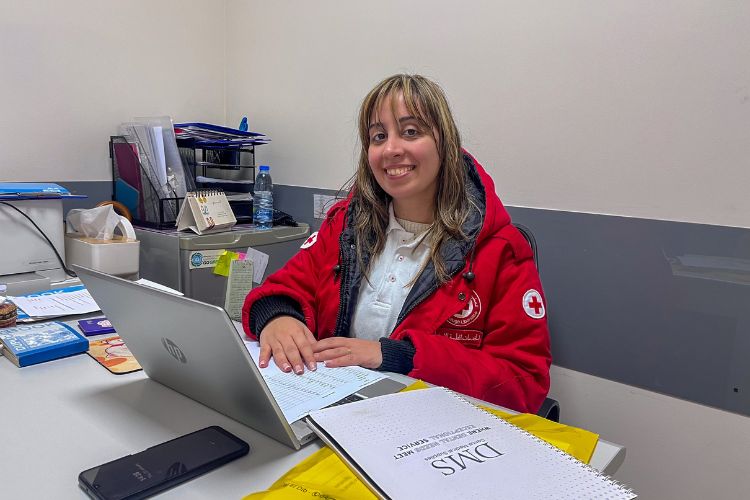
Photo: Stephanie Murphy / Canadian Red Cross
Emergency Medical Services, Supported by the Lebanese Red Cross
I later had the chance to visit the main Lebanese Red Cross Emergency Medical Services dispatch centre in Hazmieh. Dispatchers take calls to send ambulances to provide pre-hospital care, patient transfers, basic patient care, crisis response, and search and rescue. I visited at around 4:30 p.m. and the team had already taken almost 1,000 calls that day. Each of the dispatchers also volunteers as an Emergency Medical Services responder, ensuring they stay connected to the communities they serve.
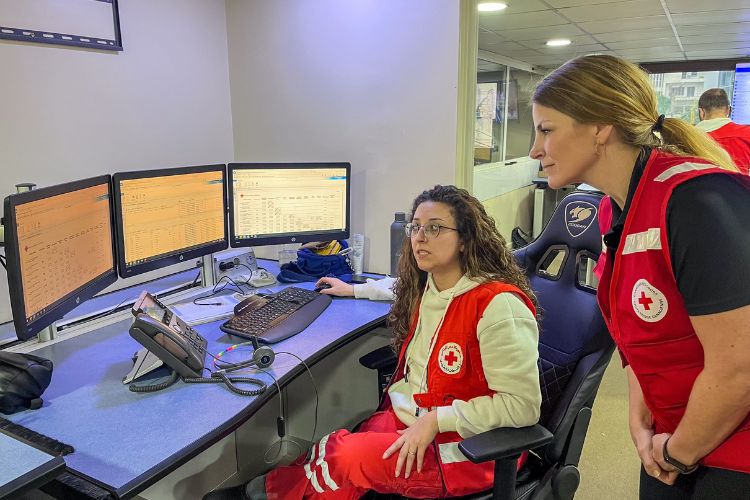
Photo: Stephanie Murphy / Canadian Red Cross
Emergency medical service is essential every day but takes on new importance during times of crises. After the Beirut explosion in 2020, emergency medical services teams from the Lebanese Red Cross helped 2,600 patients in the first 48 hours. During the escalation of conflict in the fall of 2024, their search and rescue teams were vital in helping people trapped due to damage from airstrikes.
Earlier in the day, I also heard a story about a man in the south of Lebanon who lost his wife and daughter in the conflict escalation but was rescued from the remains of his home by the Lebanese Red Cross search and rescue team.
At both the Primary Healthcare Centre and the Emergency Medical Services dispatch, I heard about the Lebanese Red Cross spirit to always be improving. More than just having the acceptance and trust of a community, local responders like the Lebanese Red Cross are accountable to the communities they serve. They gather information from surveys and other feedback mechanisms on how they’re doing and use the feedback to inform improvements to make.
The Lebanese Red Cross is working to build up their search and rescue capacity, which proved so vital during the escalation of conflict in the fall of 2024. They operated mobile medical units in areas impacted by the conflict, which included delivering prescriptions for chronic conditions, so people didn’t miss out on essential medication. They continue to show up every day, even when facing the impacts of conflict and other challenges themselves.
At the Heart of Local Support
When the Canadian Red Cross helps respond to an emergency internationally, we always do so at the request of our local National Society partner. Like the Syrian Arab Red Crescent and Lebanese Red Cross, and like the Canadian Red Cross here at home, staff and volunteers of local National Societies commit their time and energy to supporting their communities during some of the most difficult times. The Lebanese Red Cross, as well as the Jordan Red Crescent Society, who I also briefly met with on my trip, have both also expanded their focus to include responding to other crises in the region. Their regional knowledge is vital in responding to overlapping humanitarian crises. The Jordan Red Crescent Society is supporting coordinating humanitarian aid into Gaza and helping displaced Palestinians who have settled in Jordan. The Lebanese Red Cross has a long history of supporting displaced people in Lebanon, and continues to provide vital aid to those displaced from neighbouring countries.
As international partners, our help is never meant to take over, but rather to support local teams as they respond, boosting this support when needed. This dedication of local teams is at the heart of everything we do.
To learn more about our work around the world, visit: International Cooperation | Canadian Red Cross.