

By Alexis Aubin, Canadian Red Cross
During the night of July 19 to 20, 1996, unrelenting rain thrashed the Saguenay–Lac‑Saint‑Jean region. Rivers surged and spilled over their banks, roads vanished one after another, and as the water advanced, entire neighbourhoods were swallowed up by rushing floodwaters.
Before long, it became clear that this was no longer just a flood. Thousands of people were forced to hastily leave their homes. Some left with nothing. Others tried to save what they could until they realized they had to evacuate immediately.
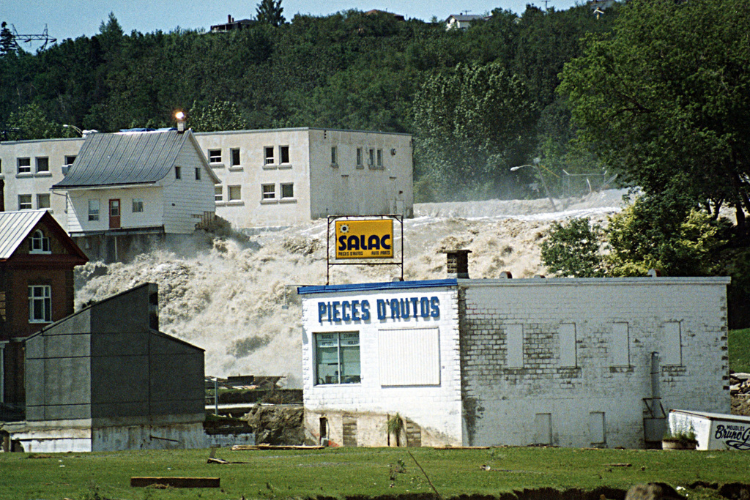
Photo: Gilles Cusson, Le monde en image
Amid the crisis, the Red Cross took on an unprecedented response. At the time, it was the largest operation the organization had ever carried out in Quebec. In the field, volunteers welcomed, guided, and offered a compassionate ear to those evacuated. They handed out clothing, organized lodging, and helped family members find one another. Simple actions—repeated hundreds of times—that became vital when everything else was gone.
From the outset, support was provided to thousands of people affected by the disaster. More than 9,600 families, representing nearly 18,880 individuals, received assistance through the efforts of around 1,700 volunteers.
As the response unfolded, one reality became clear: Even when the initial urgency subsided, the work was far from over. When the water receded, it caused much more than physical damage, and people’s lives would need to be rebuilt.
The response slowly evolved. It didn’t end with the closing of emergency shelters; it continued, but in a different way. The Red Cross tailored its efforts, supporting people over the long term and responding to their evolving needs: to regain stability, to re‑establish a sense of home, and to find their footing again.
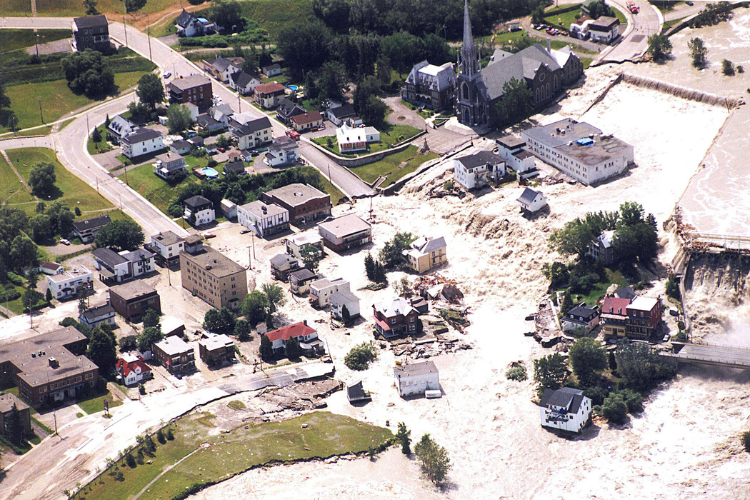
Photo: Gilles Potvin, Le monde en image
This response lasted over 13 years, and adapted with the communities themselves.
With time, it became clear that the Saguenay flood’s most enduring effect isn’t found in dramatic images or the scale of the losses, but in what it brought into focus: A disaster cannot be measured only in days or weeks because its impact unfolds along lengthy, often invisible, human trajectories marked by setbacks, detours, and new beginnings.
Thirty years later, the Saguenay flood is part of history, though not confined to the past. It remains present in the memories of those who lived through it, as much as in the response strategies that emerged from it. These floods reshaped emergency preparedness, volunteer training, collaboration with municipalities, and the organization of assistance. Today, every response launched anywhere in Quebec still reflects something of that experience.
But its most enduring influence may lie elsewhere. It rests in the lessons learned in the Saguenay at a pivotal moment: The extent of what solidarity can achieve, and all that it enables us to rebuild, gradually, over time.
To learn how you can protect yourself and your family before, during, and after a flood, visit our flood emergency page.