

“If not you, then who? You have the power to help stop bullying,” says Rachel Vicencio. She’s one of 90 leadership students at Johnston Heights Secondary School in Surrey, B.C., who has trained to become a Canadian Red Cross Beyond the Hurt Youth Facilitator.
Mental Health and Well-being
Blog Page Number 6Read blog posts from the Canadian Red Cross about mental health and well-being, including tips and resources.
Latest Posts
Here are 10 safety tips to help introduce your kids to the online world, as well as a few pointers on how to protect their privacy.
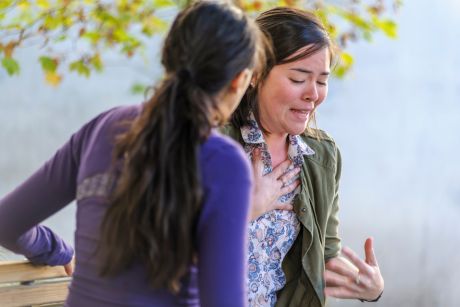 Photo: Canadian Red Cross
This article explains what panic attacks are, the signs to watch for, and straightforward ways to help someone in distress.
Your child is being bullied. You want to do everything you can to help her to feel safe and loved, but you’re not quite sure what to do or what to say. Here are a few tips.
Do you forget about the bystander when you think about bullying?
Those who bully, and the people they target, are often the focus on days like Pink Shirt Day or Pink Day. But they’re not the only people who can help end bullying. Bystanders can also make a big difference.
The Canadian Red Cross partnered with the University of Saskatchewan, College of Nursing to deliver CRC’s Respect Education curriculum, focused on healthy youth relationships.
Just in time for national Bullying Awareness Week, the Ministry of Human Services of the Province of Alberta has named the Red Cross’s anti-bullying education program as one of the winners of the 2016 Inspiration Award in the category of Leadership in Prevention of Bullying.
Name calling. Threats. Punching. Excluding. Many individuals endure these types of bullying on a daily basis. Bullying isn’t a short-term problem that only affects children; it is a serious issue that affects 75 per cent of Canadians. The problem is particularly serious in many Indigenous communities, where 95 per cent of individuals have been affected by bullying.