

In Newfoundland and Labrador, there’s a saying that you can experience all four seasons in the run of a day.
One moment, the ocean is calm. The next, winds rise, waves crash, and communities prepare for whatever might be on the way.
This is especially true for communities along the Southwestern coast of the island, where residents are no strangers to severe weather and intense storms.
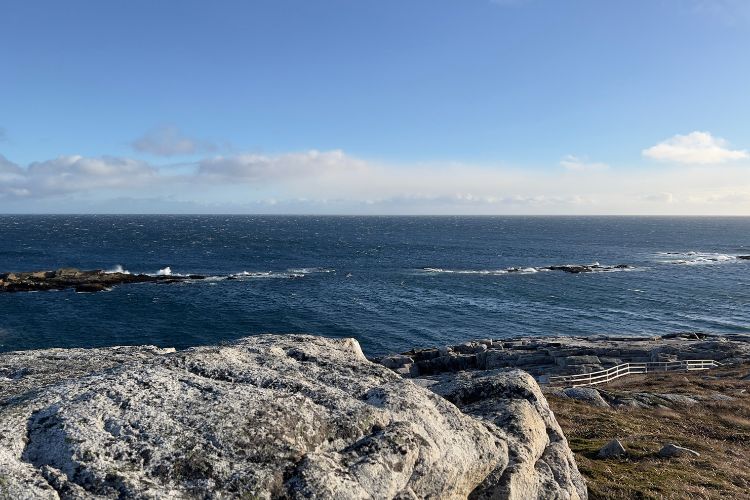
Photo: Elizabeth Brown / Canadian Red Cross
From heavy winds and hurricanes to flooding and storm surges, the impacts can affect homes, local businesses, and entire communities.
As disruptive events become more frequent and intense, preparation is essential.
Why Emergency Preparedness Matters
Storms like Fiona in 2022 serve as a reminder of just how quickly things can change and how disruptive storms in the region can be. They also reinforce that being ready can make a significant difference in mitigating the risks and impacts.
That’s what Emergency Preparedness Week is all about. Making sure individuals, households, and communities have the tools, resources, and plans in place before an emergency happens.
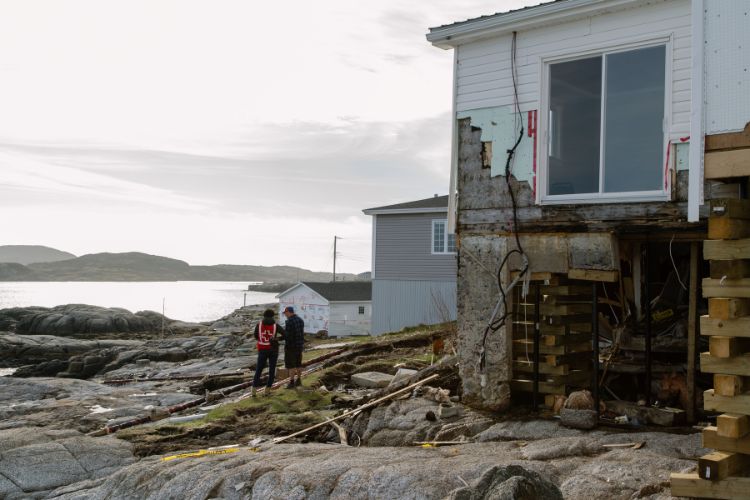
Photo: Michelle-Andrea Girouard / Canadian Red Cross
Working Together to Prepare for Emergencies and Disasters
In November 2025, the Canadian Red Cross worked alongside municipal, provincial, and Indigenous leadership to strengthen emergency preparedness and awareness across coastal communities in Newfoundland and Labrador.
Through the Be Ready program, Red Cross teams hosted a series of hands-on workshops in coastal communities located on the Southwestern part of the island that are at high risk of hurricanes, flooding, and wildfires.
These sessions are more than presentations - they are conversations. Participants, who are often community members and community leaders, gather to talk about the challenges they face, share their experiences, and work together to find ways to prepare for future emergencies.
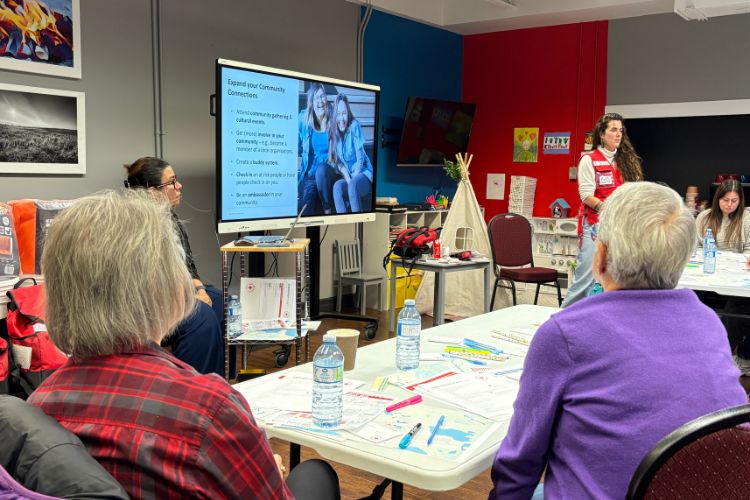
Photo: Canadian Red Cross
The Importance of Local Knowledge in Emergency Preparedness
Be Ready workshop participants shared that one of the most impactful parts of the sessions has been community mapping. Sitting around printed maps, residents mark local risks, safe areas, and key resources in the community.
They point out areas that are prone to risks, identify vulnerable areas, and share knowledge of the land that comes from living in these communities.
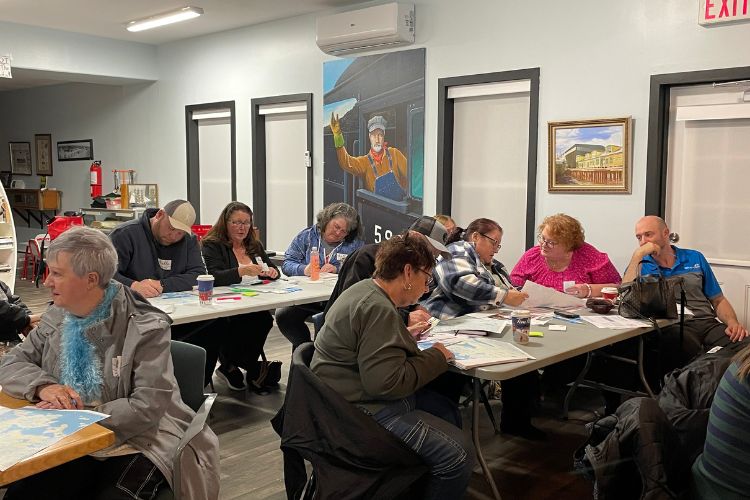
Photo: Canadian Red Cross
These activities and conversations often lead to something just as important as emergency planning, which is building a network of connections.
Stories are shared, lessons from previous emergencies are passed on, and community members learn from one another in ways that build both knowledge and trust.
As an organization, we also learn from communities. We work with information management teams to bring together what community members mapped, combining local knowledge with scientific data. These maps support both local decision-making and our own organizational planning.
Emergency Preparedness for Rural Communities and Older Adults
Preparedness for smaller, more rural communities can look a little different. Accessing supplies isn’t as simple as a quick trip to the store, and resources can often be limited.
The same goes for older adults. With an aging population in Newfoundland and Labrador, it’s important that emergency plans reflect the needs of the people living in these communities.
To help bridge these gaps, Red Cross teams have supported communities with resources specific to emergency preparedness for older adults.
A Strong Sense of Community
One thing that’s shared across all these coastal communities in Newfoundland and Labrador is their resilience. These communities are places where neighbours check in on each other, and knowledge is passed down from generation to generation.
As a local saying goes, “saltwater runs in our veins.” It speaks to both the deep connection to the coast and the resilience that comes with it.
That same spirit is at the heart of emergency preparedness in these communities. Because when the weather turns, being prepared is more than having a plan. It’s about looking out for each other and coming together as a community.
Learn More about Emergency Preparedness and the Steps to Take to Be Prepared
This Emergency Preparedness Week, take the time to review the steps to be ready in case of an emergency or disaster:
- Know the risks in your community
- Make a plan
- Build an emergency kit
- Build a network in your community
To learn more about how you and your household can prepare for emergencies and disasters, visit: Be Ready | Canadian Red Cross.