

Climate change is no longer a distant concern—it’s already hitting certain regions hard, permanently altering the living conditions of their residents. This is especially true in the Magdalen Islands, where environmental upheaval is being felt with growing intensity.
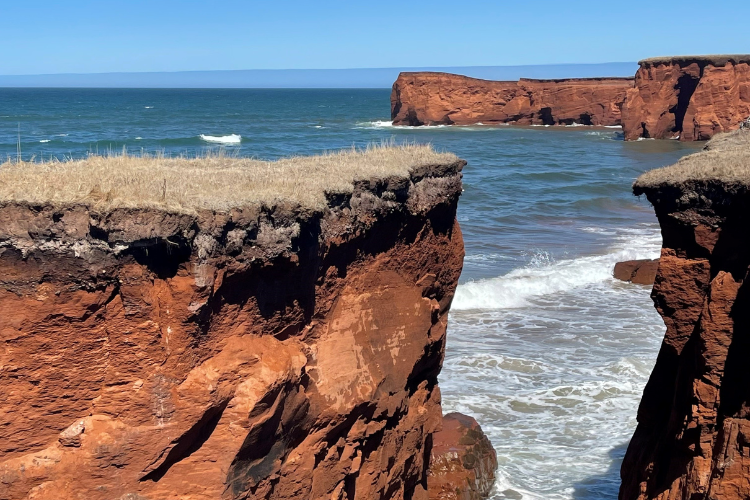
Photo: Manon Tomas
The people of the Magdalen Islands have front row seats to a climate crisis with very real consequences.
On September 23 and 24, 2022, tropical storm Fiona struck Atlantic Canada. Thousands of people were impacted by record-breaking winds and rainfall. At the height of the storm, nearly 500,000 people were without power. In Quebec, the storm led to 37 evacuations in the Magdalen Islands. The areas most affected by flooding included the historic site of La Grave in Havre-Aubert, as well as the Pointe-Basse and La Martinique sectors.
In the face of extreme weather events that disrupt local communities and threaten their safety, the need for emergency preparedness is more urgent than ever. When natural disasters strike, it’s essential for people to be able to rely on swift, coordinated, and effective support.
That’s where the Red Cross plays a vital role—leading prevention and education initiatives to help strengthen community resilience in the face of future crises.
Its response in the Magdalen Islands clearly demonstrates the importance of having a strong system in place—one that can meet the challenges of a rapidly changing climate.
Assistance was provided by the Red Cross to help people impacted meet their basic needs for information, food, lodging, clothing, family reunification, and personal services..
More recently, as part of the recovery project funded by the 2022 Hurricane Fiona Appeal, the Canadian Red Cross delivered emergency kits to the municipality. These kits contained essential supplies for setting up reception centres for impacted people. An information session and a preparedness exercise also took place with municipal officials to help strengthen emergency readiness.
At the same time, the Quebec Division team carried out several public education activities:
- Six emergency preparedness workshops were held in retirement homes
- Two emergency preparedness workshops were offered to the general public
- One information booth to engage with residents of the Magdalen Islands and talk about their readiness level
The project continues with new activities developed in collaboration with local community stakeholders. A heartfelt thank you to all the partners and community members whose ongoing involvement strengthens our collective ability to prevent risks and respond effectively to emergencies.
Protect yourself and your family before, during, and after a hurricane. Learn more about hurricanes.