

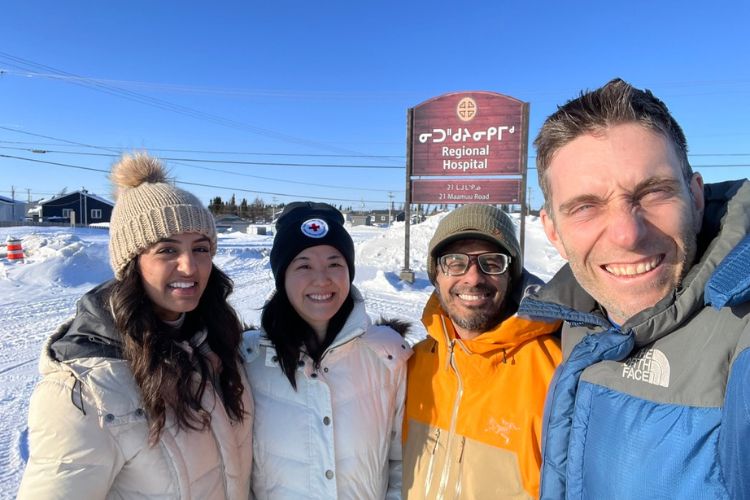
In March, I spent a week in Chisasibi, a Cree community in northern Quebec, supporting an unconventional alliance that is rethinking how we respond to health emergencies in remote and austere environments.
Imagine an airstrike in a region experiencing conflict, where the nearest trauma centre is out of reach. Or a snowmobile crash deep in the bush, with emergency care accessible only by airlift. Or an astronaut in space developing chest pain, with no advanced medical support on board.
At first glance, these scenarios seem worlds apart. Look closer, and the same challenge emerges: how do you deliver emergency care when resources are limited, expertise is far away, and decisions can’t wait?
Now imagine a technology designed for exactly this challenge, adaptable across remote northern communities, humanitarian crises, and even deep space.
Canadian Red Cross Collaborates with the Canadian Space Agency
With that vision in mind, a collaboration between the Canadian Space Agency (CSA) and the Canadian Red Cross was born. Together, the Canadian Red Cross and Canadian Space Agency are exploring how innovative technologies can be adapted to support emergency response in remote environments.
One joint project being explored through this collaboration is Advanced Astronaut Medical Support (A.D.A.M.S.), a technology developed by Paratus Medical, with support from the CSA.
Originally designed to support astronauts managing medical emergencies in space, A.D.A.M.S. uses artificial intelligence (AI) to translate complex clinical guidance into clear, step-by-step decision support during high-pressure situations.
As the technology continues to evolve, it's clear its potential extends far beyond space.
From Space Medicine to the Cree Bush in James Bay
Back on Earth in Cree Territory, bush calls, or medical emergencies occurring far out on the land, present conditions strikingly similar to those A.D.A.M.S. was built to address: limited equipment, great distances from advanced care, and no time to wait.
Building on established relationships with the Cree Board of Health and Social Services of James Bay, collaborators worked together to pilot an adapted version of A.D.A.M.S. for bush call response in Whapmagoostui, Quebec, in March 2025. The initial proof of concept showed clear promise, improving access to critical information and offering greater usability than traditional paper-based tools.
Encouraged by this early success, the team moved quickly to refine the platform. Updates focused on simplifying the user interface, integrating precise GPS geolocation, strengthening visual guidance, and enhancing AI-supported recommendations, all while keeping the realities of remote care front and centre.
Exploring What Works, Together
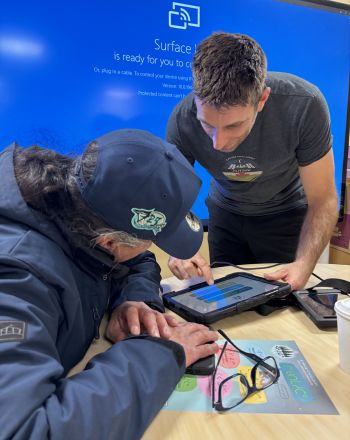
By March 2026, the project entered its next phase. Along with another member of the Canadian Red Cross, I joined collaborators from Paratus Medical, the Cree Board of Health and Social Services of James Bay, the Cree Trappers’ Association, and local physicians and nurses in Chisasibi to adapt the next iteration of the platform (the Cree medical bush kit) through realistic, hands-on simulations.
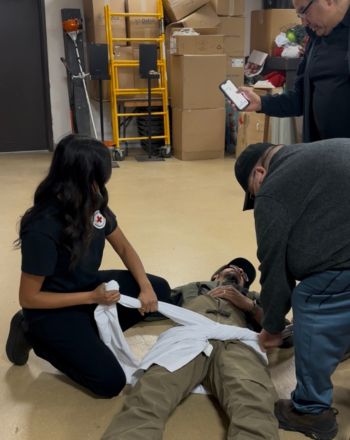
One of the most powerful lessons was also the simplest: sometimes, less is more. Not every solution needs to be highly advanced to be life changing. Thoughtful design, cultural consideration, and practical usability can matter far more than technical complexity.
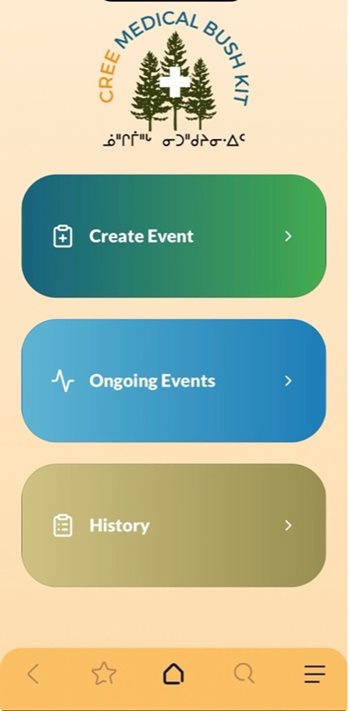
The insights gathered during these simulations are now informing the final iteration of the tool, with the goal of implementing it for real-world bush call response in Cree communities.
More Than Technology
What stood out most to me was not just the technology but the collaboration behind it.This unlikely convergence of collaborators, spanning space agencies, humanitarian responders, Indigenous leadership, engineers, clinicians, and land users, is a powerful reminder that what brings us together is stronger than what sets us apart.
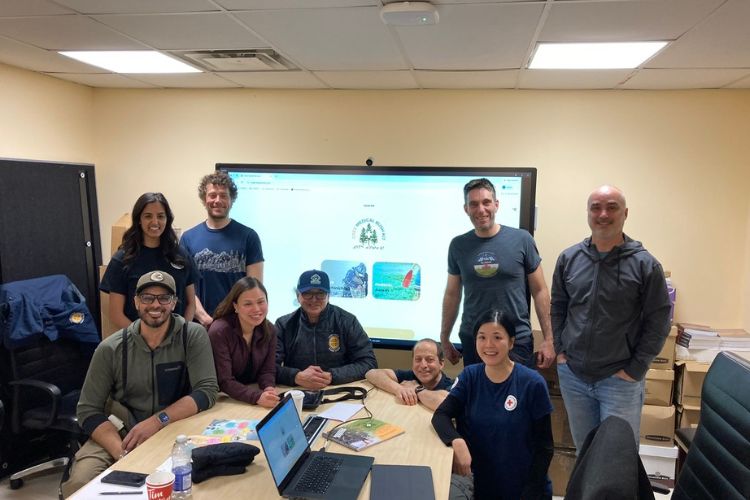
The synergy of brainstorming and problem solving across such different contexts created something far more grounded and practical than any one organization could have built alone.
Following the field exercise, there was a lasting, shared sense of hope in the potential of this tool to save lives. In the end, whether orbiting the Earth or standing beneath the northern lights, the challenges we face and the humanity that drives us to solve them are deeply connected.