

James Spooner is a Canadian Red Cross Information Technology & Telecommunications (ITT) expert with more than 35 years of experience. He was most recently in Jamaica, supporting the Hurricane Melissa response.
Alexis Aubin, Canadian Red Cross communications delegate captures James’ experience in Jamaica, offering a closer look into the responsibilities of technical operational support during a humanitarian response.
Can you introduce yourself, your IT background, and your role in supporting the mission?
I’m James Spooner, serving as an Information Technology & Telecommunications (ITT) Delegate with the Canadian Red Cross. My background includes over 35 years in IT infrastructure, emergency telecommunications, and field support—working with satellite systems, network deployments, and information and communication technology (ICT) continuity planning in challenging environments.
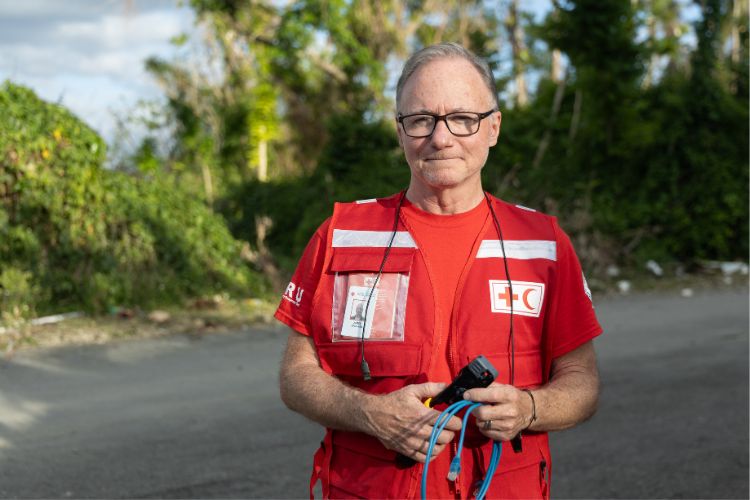 Photo: Alexis Aubin / Canadian Red Cross
For the Hurricane Melissa response, my role was to ensure the Emergency Response Unit has the digital tools, communications systems, and connectivity needed to operate safely and effectively.
That includes setting up secure internet links, supporting voice and data communications, ensuring our field teams have the tools to coordinate, and troubleshooting any technology issues that arise.
Emergency Response Units (ERU) are teams of trained Red Cross technical experts who are ready to respond to emergencies in Canada and around the world. In Jamaica, the Canadian Red Cross ERU consists of an emergency medical clinic team that works with local partners to provide support at health centres in storm-affected areas.
What motivated you to join this mission, and why did you choose to come now?
I joined this mission because when a disaster strikes, reliable communication becomes a lifeline. IT isn’t usually the first thing people think about in a crisis, but without connectivity, coordination slows down and people wait longer for help.Coming just after Hurricane Melissa was important because it was a critical period when assessments were happening, teams were mobilizing, and a lot of decisions relied on timely information. I wanted to contribute my skills where they matter most—on the ground, when communities and responders are under pressure.
What kind of IT systems or digital support did you provide for the mission?
My support spans a range of ITT services. This includes:
- Setting up and maintaining satellite communications.
- Deploying local area networks (LAN/Wi-Fi) for field offices, the Emergency Operations Centre, and the mobile clinics if deployed.
- Supporting digital tools such as Red Cross Health Information System, logistics systems, and shared file environments.
- Ensuring cybersecurity and data protection, including access control, device hardening, and secure handling of sensitive information.
- Providing radio and telephony support.
- General IT troubleshooting for the entire team.
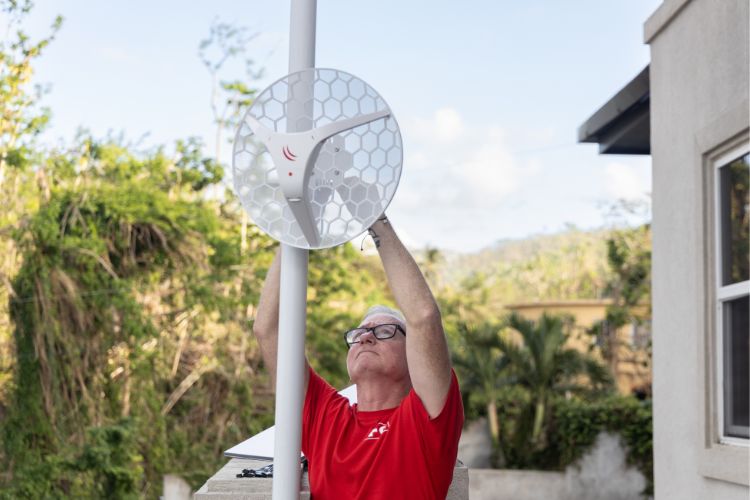 Photo: Alexis Aubin / Canadian Red Cross
How does your role help the field teams and the overall mission’s effectiveness?
Good IT infrastructure acts like the nervous system of a response operation. If it’s strong, everyone can move faster and with better situational awareness.My role ensures field teams can send assessments back quickly, operations leads can make informed decisions in real time, and logistics can track supplies and movement efficiently.
Essentially, I help make sure technology isn’t a barrier—but a force multiplier for the mission. The team can work safely, knowing they have communication even in remote or damaged areas.
What IT challenges do you see in the field?
Every deployment has its own challenges, but here I anticipate connectivity issues due to outages, damaged infrastructure, or congested networks. Power reliability can also be a problem, impacting equipment uptime and charging of devices.Environmental factors like heat, humidity, and rain affecting electronics, while limited bandwidth for high-demand applications. There is also logistical complexity, such as providing Internet to remote or hard-hit areas.
Another key area is data management, ensuring information is captured consistently, backed up, and shared securely. Supporting user needs, especially when team members rely heavily on digital tools for field assessments and reporting.
These are typical in emergency settings, and we prepare with redundancies, backups, and adaptable systems.
How does your prior IT experience prepare you for working in challenging field conditions?
I have worked internationally in technically challenging environments for most of my career, this means working with satellite communications equipment, managing networks under constraints, and supporting teams in environments with minimal infrastructure. I’ve learned how to be resourceful—how to troubleshoot without all the typical tools, how to improvise solutions when equipment is limited, and how to prioritize what’s mission-critical.
I’m comfortable with satellite tech, radio communications, and rapid network deployment, which are essential in a disaster context. And I’ve had experience working under pressure, supporting teams who rely heavily on reliable communications to stay safe and effective.
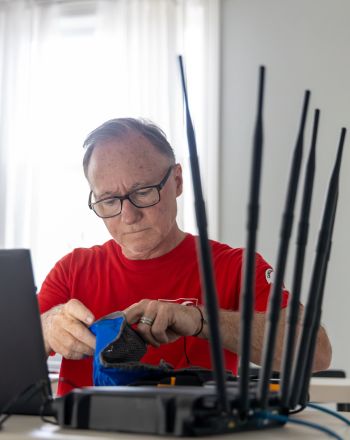
Photo: Alexis Aubin / Canadian Red Cross
Is there anything else you’d like to share about your IT support work or observations from the mission?
One thing I’d highlight is how much teamwork goes into a response like this. Technology is important, but it only works when it’s integrated with operations, logistics, health, and admin teams.I’m also always inspired by the resilience of affected communities and the dedication of local volunteers and partners. As IT support, I’m here to make sure our teams can focus on helping people—because the more seamless our systems are, the more time and energy we can direct into supporting those who need it most.
To learn more about how the Canadian Red Cross and Red Cross Red Crescent Movement are helping people impacted by Hurricane Melissa, visit: Hurricane Melissa.
Interested in joining the Canadian Red Cross? Visit our Career Centre to explore various positions available at this time.