

By: Kelsey Lemon, Vice President, International Cooperation
There is something incredible about a group of humanitarians coming together for a common cause. Not only do we learn the needs and the work being done, but we see how to create greater impact as a humanitarian community, and show solidarity for staff and volunteers working tirelessly to reduce suffering.
This was the situation when we travelled to West Bank in early November to attend the Palestine Red Crescent Society (PRCS) partnership meeting. The sheer volume of people that came to an insecure context to be there with the National Society was really amazing.
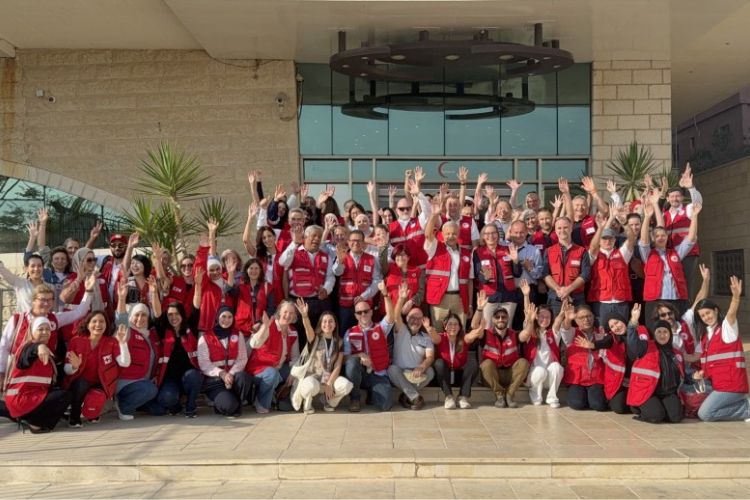
Photo: Palestine Red Crescent Society
The many participants present included representatives from the International Committee of the Red Cross and International Federation of Red Cross and Red Crescent Societies as well as from Red Cross and Red Crescent National Societies and government officials from around the world.
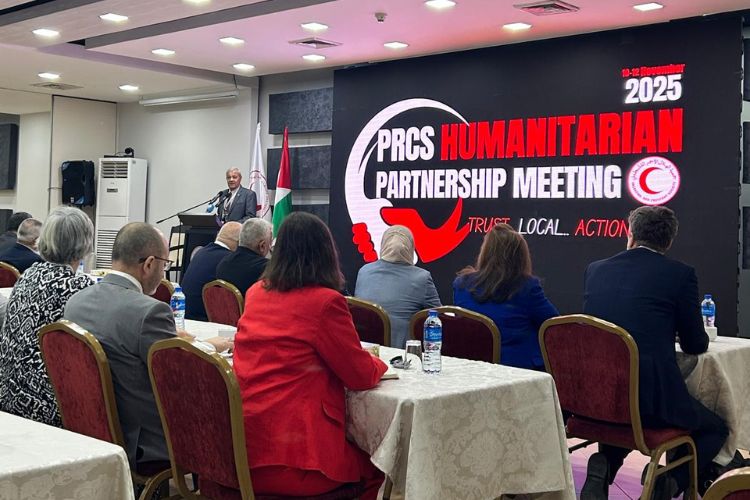
Photo: Kelsey Lemon / Canadian Red Cross
It is inspiring to hear about their critical work in West Bank, including East Jerusalem, and Gaza, but even more so to travel to the villages where the work happens to meet these real-life superheroes. In a small community near Nablus, we met volunteers doing first aid training and providing basic health services. This is an area that is frequently impacted by violence – it’s unsafe for people to travel to their groves to harvest olives, and often parents don’t let their kids out to ride their bikes.
Yet, volunteers work passionately, often in situations where their safety is not guaranteed to help those who could otherwise die. The volunteers also train others, so when lifesaving help is needed there is someone to provide it.
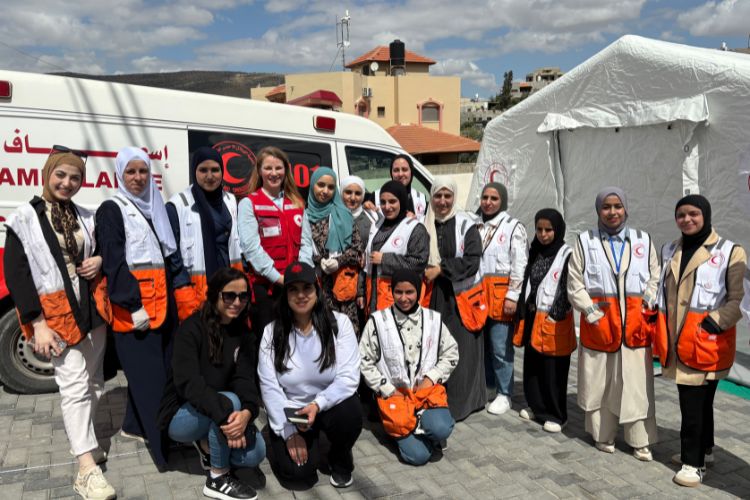
Photo: Angela Hill / Canadian Red Cross
When there is a crisis, or emergency, PRCS volunteers are the ones that are there in the community. Community members turn to them for support, and they rely on and expect PRCS to be there. They trust PRCS and rely on them for support in their darkest hours.
There is no greater mark of accountability.
As the Canadian Red Cross, we trust our local partners to know what is best for their communities and we support them in those efforts. It’s a privilege for us to be able to contribute to meaningful humanitarian action.
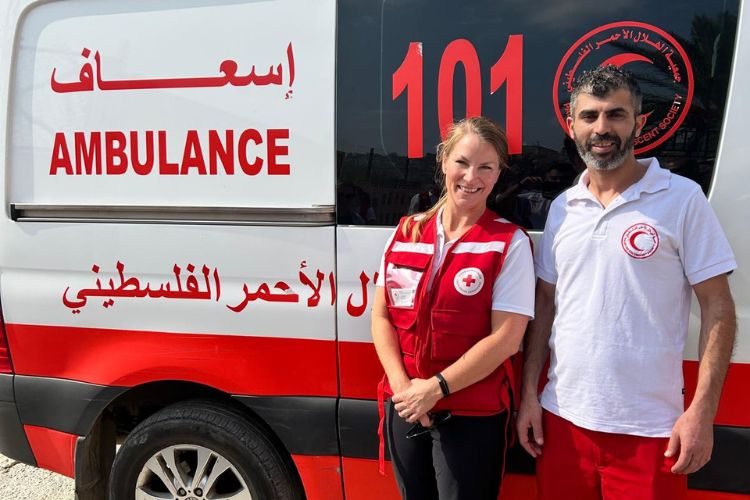
Photo: Canadian Red Cross
To help access hard-to-reach areas throughout West Bank, the Canadian Red Cross provided mini ambulances, and 4x4 quad vehicles to access all people in need. This is part of an ongoing PRCS and Canadian Red Cross project funded by the Government of Canada, which helps PRCS continue building their capacity and responding to emergencies in the region.
This work is made possible by the support of generous donors and the Government of Canada.
To learn more about how the Canadian Red Cross is supporting, visit: Occupied Palestinian Territory and Middle East Humanitarian Crisis.
There is something incredible about a group of humanitarians coming together for a common cause. Not only do we learn the needs and the work being done, but we see how to create greater impact as a humanitarian community, and show solidarity for staff and volunteers working tirelessly to reduce suffering.
This was the situation when we travelled to West Bank in early November to attend the Palestine Red Crescent Society (PRCS) partnership meeting. The sheer volume of people that came to an insecure context to be there with the National Society was really amazing.
Photo: Palestine Red Crescent Society
The many participants present included representatives from the International Committee of the Red Cross and International Federation of Red Cross and Red Crescent Societies as well as from Red Cross and Red Crescent National Societies and government officials from around the world.
When Communities Lead: Trust and Accountability in Action
The theme, Trust Local Action, is incredibly relevant for the humanitarian sector today. We understand the critical role of local actors now more than ever before. Not only are they a part of the communities they serve, and closest to humanitarian needs, they are accountable to those in the community that rely on them. PRCS is an example of a strong, locally rooted organization that serves the communities they live and work in.Photo: Kelsey Lemon / Canadian Red Cross
It is inspiring to hear about their critical work in West Bank, including East Jerusalem, and Gaza, but even more so to travel to the villages where the work happens to meet these real-life superheroes. In a small community near Nablus, we met volunteers doing first aid training and providing basic health services. This is an area that is frequently impacted by violence – it’s unsafe for people to travel to their groves to harvest olives, and often parents don’t let their kids out to ride their bikes.
Yet, volunteers work passionately, often in situations where their safety is not guaranteed to help those who could otherwise die. The volunteers also train others, so when lifesaving help is needed there is someone to provide it.
Local Knowledge and Trust Within Communities
PRCS knows the people they work with, they speak their language, and it shows every day that they are their communities’ chosen providers.Photo: Angela Hill / Canadian Red Cross
When there is a crisis, or emergency, PRCS volunteers are the ones that are there in the community. Community members turn to them for support, and they rely on and expect PRCS to be there. They trust PRCS and rely on them for support in their darkest hours.
There is no greater mark of accountability.
As the Canadian Red Cross, we trust our local partners to know what is best for their communities and we support them in those efforts. It’s a privilege for us to be able to contribute to meaningful humanitarian action.
Supporting Local, Community-Led Humanitarian Response
This is a continuing shift in the humanitarian sector away from internationally led operations, to those led by communities. This ensures the right response, to the right people, and at the right time.Photo: Canadian Red Cross
To help access hard-to-reach areas throughout West Bank, the Canadian Red Cross provided mini ambulances, and 4x4 quad vehicles to access all people in need. This is part of an ongoing PRCS and Canadian Red Cross project funded by the Government of Canada, which helps PRCS continue building their capacity and responding to emergencies in the region.
This work is made possible by the support of generous donors and the Government of Canada.
To learn more about how the Canadian Red Cross is supporting, visit: Occupied Palestinian Territory and Middle East Humanitarian Crisis.