

By Alexis Aubin, Communication Advisor, Canadian Red Cross
In Jamaica, Cuba, and across the central Caribbean, Hurricane Melissa’s torrential rains triggered flash floods and landslides, threatening lives, livelihoods, and infrastructure, such as schools and health centres.
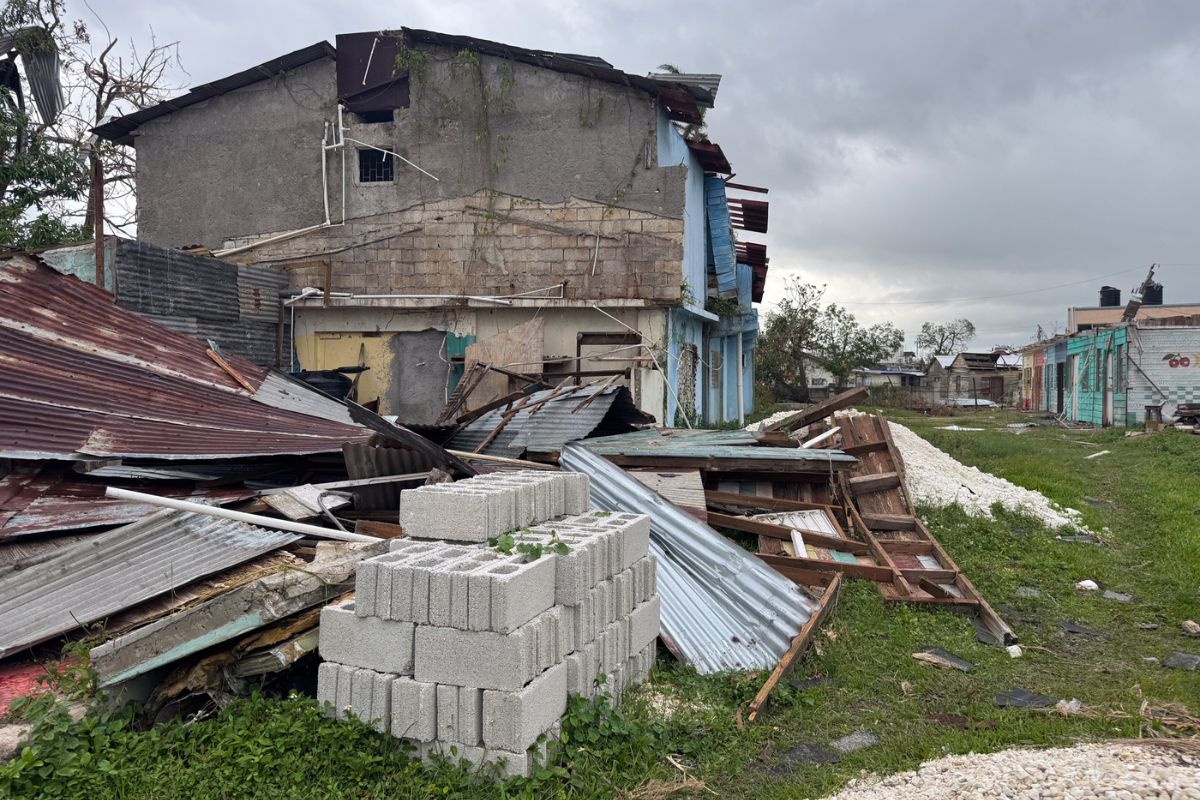
Photo: Lauren Sabin / International Federation
Hurricane Melissa, one of the most powerful storms ever recorded in the Atlantic Ocean, served as a reminder of an alarming reality: climate change is intensifying the strength and duration of tropical storms and compounding socioeconomic disparities by disproportionately affecting those most vulnerable.
To learn more about hurricanes in Canada, please consult the Canadian Hurricane Centre’s Frequently Asked Questions.
As oceans warm, they provide more energy to hurricanes, increasing wind speeds and rainfall. In addition, rising sea levels exacerbate flooding caused by the storms.
According to a report by the Intergovernmental Panel on Climate Change, the proportion of tropical cyclones reaching categories four and five may increase by around 10 per cent if global temperature rises are limited to 1.5 °C, and up to 20 per cent if temperatures were to increase by 4° C.
In Jamaica, it is common for the head of a household to be a single woman with several dependent children. According to a 2022 United Nations Children’s Fund report, 52.7 per cent of household heads are women.
When these families live in high-risk areas, such as flood zones, they are more likely to suffer damage such as roofs being blown off, walls collapsing, or the loss of their livelihood, namely livestock. As only approximately 20 per cent of Jamaican homes are insured, low-income households struggle to recover—a vicious cycle that further widens the gap.
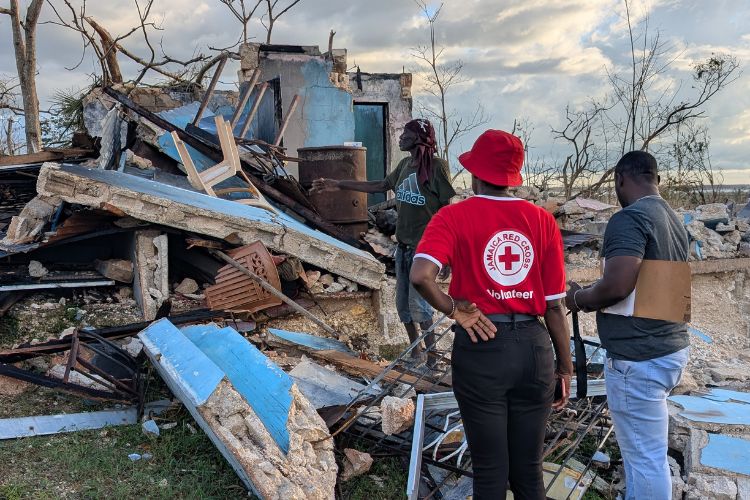
Photo: Clarisse Smitas / International Federation
These risks also vary according to age, gender identity, physical ability, geographic location, and many other factors that can influence how a person is affected by a climate event, as well as how they respond and recover.
The Red Cross systematically integrates Protection, Gender, and Inclusion (PGI) issues into its operations to respond to these realities, tailoring assistance to the specific needs of each group and ensuring an equitable response.
“Investing in preparedness and locally led action enables us to identify, ahead of time, who is most at risk and how best to reach and engage them—so that no one is left behind,” explains Marianna Kuttothara Regional Head, Health, Disasters, Climate and Crisis (HDCC) for the International Federation of Red Cross and Red Crescent Societies (IFRC) in the Americas Region.
This local approach is supported by anticipatory funding mechanisms. With support from the Government of Canada and the Canadian Red Cross, the International Federation of Red Cross and Red Crescent Societies’ Disaster Response Emergency Fund (IFRC-DREF) facilitates action before a disaster occurs.
“The DREF has an anticipatory action pillar that aims to save more lives and reduce impact by funding preparation measures,” explains Marianna.
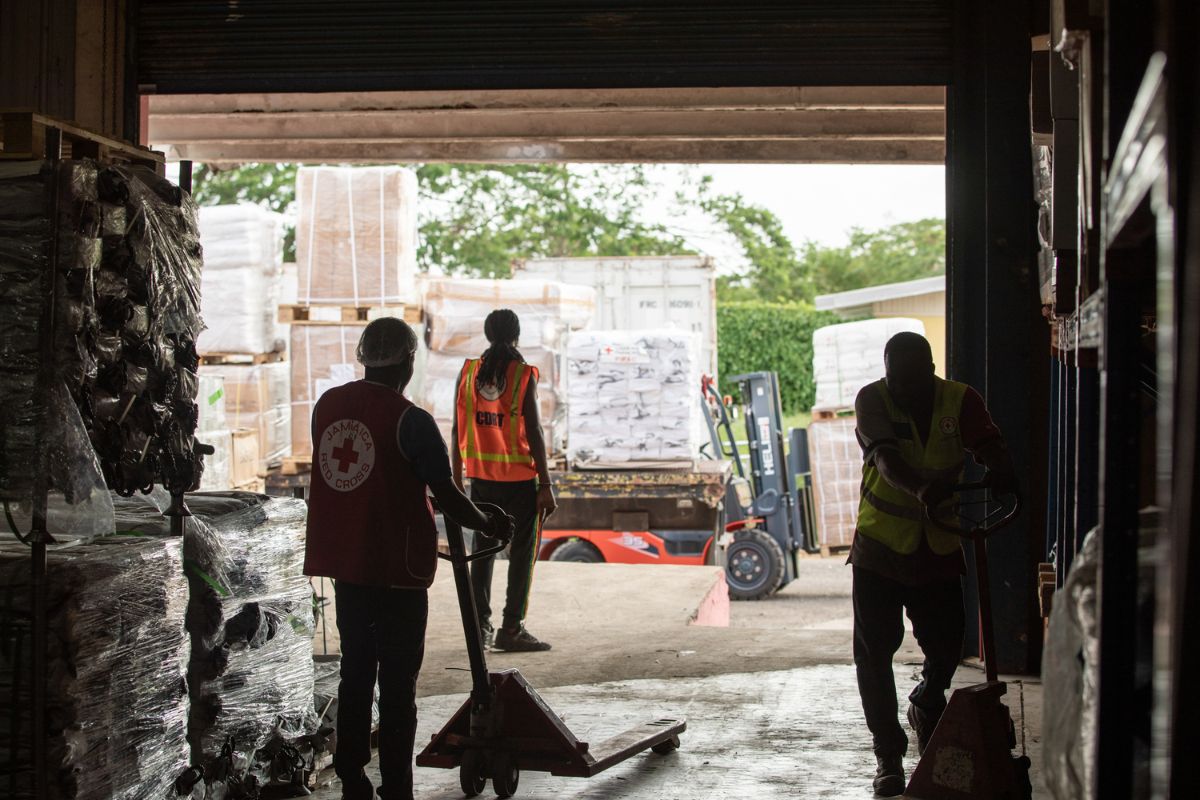
Photo: Damien Fulton Naylor / International Federation
In the case of Hurricane Melissa, this approach enabled the Cuban Red Cross and the Jamaica Red Cross to pre-position shelters, food, and emergency equipment, and to support preventive evacuations, reducing loss of life.
The Cuban Red Cross also strengthened its protection, gender, and inclusion capacity during its preparatory phase, in May 2025, by adopting policies to prevent sexual exploitation and abuse and providing specialized training to staff and volunteers.
The Red Cross ensures that each phase of the response considers the specific needs of those affected. For example, this includes distributing menstrual hygiene kits or solar lamps to reduce the risk of violence in areas without electricity. It also encompasses financial assistance programs to enable individuals and families with the greatest needs to choose their own priorities.
By specifically targeting these needs—before, during, and after disasters—we can mitigate the impact of climate change on people in vulnerable situations and prevent increasingly powerful hurricanes from further exacerbating the inequalities that they expose.
In Jamaica, Cuba, and across the central Caribbean, Hurricane Melissa’s torrential rains triggered flash floods and landslides, threatening lives, livelihoods, and infrastructure, such as schools and health centres.
Photo: Lauren Sabin / International Federation
Hurricane Melissa, one of the most powerful storms ever recorded in the Atlantic Ocean, served as a reminder of an alarming reality: climate change is intensifying the strength and duration of tropical storms and compounding socioeconomic disparities by disproportionately affecting those most vulnerable.
Why hurricanes are becoming more destructive
Tropical cyclones are categorized based on wind speed using the Saffir Simpson Hurricane Wind Scale. A cyclone becomes a hurricane when winds reach a minimum of 119 km/h and is classified into five categories. Hurricanes at or above Category 3, with sustained winds exceeding 178 km/h and reaching over 252 km/h, are considered “major.” They cause severe destruction, even catastrophic devastation.To learn more about hurricanes in Canada, please consult the Canadian Hurricane Centre’s Frequently Asked Questions.
As oceans warm, they provide more energy to hurricanes, increasing wind speeds and rainfall. In addition, rising sea levels exacerbate flooding caused by the storms.
According to a report by the Intergovernmental Panel on Climate Change, the proportion of tropical cyclones reaching categories four and five may increase by around 10 per cent if global temperature rises are limited to 1.5 °C, and up to 20 per cent if temperatures were to increase by 4° C.
When disasters amplify inequalities
The impact of these hurricanes is not experienced equally by all the people affected, and every disaster tends to amplify existing inequalities. Within the same municipality, consequences may vary greatly depending on income, the quality of housing construction, and the level of access to essential services.In Jamaica, it is common for the head of a household to be a single woman with several dependent children. According to a 2022 United Nations Children’s Fund report, 52.7 per cent of household heads are women.
When these families live in high-risk areas, such as flood zones, they are more likely to suffer damage such as roofs being blown off, walls collapsing, or the loss of their livelihood, namely livestock. As only approximately 20 per cent of Jamaican homes are insured, low-income households struggle to recover—a vicious cycle that further widens the gap.
Photo: Clarisse Smitas / International Federation
These risks also vary according to age, gender identity, physical ability, geographic location, and many other factors that can influence how a person is affected by a climate event, as well as how they respond and recover.
The Red Cross systematically integrates Protection, Gender, and Inclusion (PGI) issues into its operations to respond to these realities, tailoring assistance to the specific needs of each group and ensuring an equitable response.
“Investing in preparedness and locally led action enables us to identify, ahead of time, who is most at risk and how best to reach and engage them—so that no one is left behind,” explains Marianna Kuttothara Regional Head, Health, Disasters, Climate and Crisis (HDCC) for the International Federation of Red Cross and Red Crescent Societies (IFRC) in the Americas Region.
Anticipating disasters to mitigate their impact
This local approach is supported by anticipatory funding mechanisms. With support from the Government of Canada and the Canadian Red Cross, the International Federation of Red Cross and Red Crescent Societies’ Disaster Response Emergency Fund (IFRC-DREF) facilitates action before a disaster occurs.“The DREF has an anticipatory action pillar that aims to save more lives and reduce impact by funding preparation measures,” explains Marianna.
Photo: Damien Fulton Naylor / International Federation
In the case of Hurricane Melissa, this approach enabled the Cuban Red Cross and the Jamaica Red Cross to pre-position shelters, food, and emergency equipment, and to support preventive evacuations, reducing loss of life.
The Cuban Red Cross also strengthened its protection, gender, and inclusion capacity during its preparatory phase, in May 2025, by adopting policies to prevent sexual exploitation and abuse and providing specialized training to staff and volunteers.
Responding and rebuilding differently
After the storm, the most urgent needs must be addressed in an inclusive, sustainable, and equitable way. The active participation of affected communities remains at the core of this approach: “Community engagement and accountability are embedded at every stage so that the voices and feedback of affected communities guide and strengthen the response,” adds Marianna.The Red Cross ensures that each phase of the response considers the specific needs of those affected. For example, this includes distributing menstrual hygiene kits or solar lamps to reduce the risk of violence in areas without electricity. It also encompasses financial assistance programs to enable individuals and families with the greatest needs to choose their own priorities.
By specifically targeting these needs—before, during, and after disasters—we can mitigate the impact of climate change on people in vulnerable situations and prevent increasingly powerful hurricanes from further exacerbating the inequalities that they expose.