

Amr Ali is a media officer with the Palestine Red Crescent Society in Gaza. He’s graciously shared his story with us over the past two years as his family endured the impact of the conflict. He shared his most recent update prior to the current ceasefire agreement being announced. See below for links to Amr’s previous updates.
Leaving Gaza City, Again
Yes, I’ve had to evacuate, again. Not for the first time, and probably not the last. I’ve lost count, truly. Eighth? Ninth? I can’t remember anymore. This conflict makes memory a burden you’d rather not carry. But this time, it tore something deeper.We had returned to our home in Gaza City by what felt like a miracle. We tried to rebuild; not stability, because conflict doesn’t allow for that, but maybe rhythm, maybe something close to breathing without fear. Then came the sirens. Then the decision. Then we prepared our bags. Again.
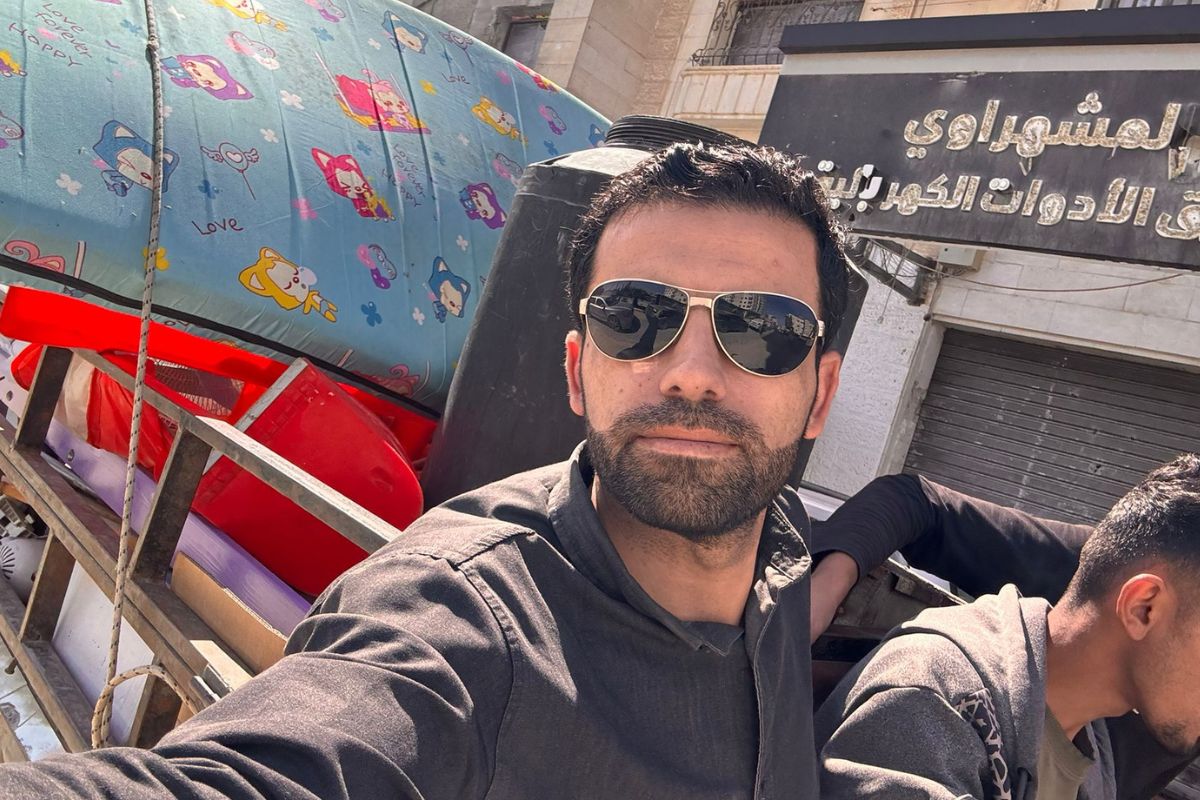
Photo: Amr Ali / Palestine Red Crescent Society
We left, carrying more than the last time: more clothes, more pictures, more illusions. This wasn’t a journey. It was a descent. Into humiliation, into danger, into something that felt beneath even despair. Walking south wasn’t walking at all, it was dragging. Our feet, our dignity, our memories. Around me were faces emptied of expression, hands grasping onto the last pieces of their homes, a mattress, a plastic bag, a photograph wrapped in cloth.
Children cried not for food, but because the ground kept moving under them and their parents couldn’t make it stop. We reached a place, not a home. A corner of something we could fit into. We hung tarps. We sealed the cracks. We tried to convince ourselves this was shelter. It’s not.
Holding On, One Day at a Time
Feeding my family has become an act of resistance. Against collapse. We search first, what’s left? A bag of rice, maybe. A can of beans. We cannot afford vegetables anymore. Their prices feel like a punishment for surviving. There is no gas. We cook with firewood, if we’re lucky to find some. We were forced to break the doors of our house so we could use them to light a fire. We cook in a corner that’s not a kitchen. We eat together, quietly, as if trying not to wake the grief sleeping beside us.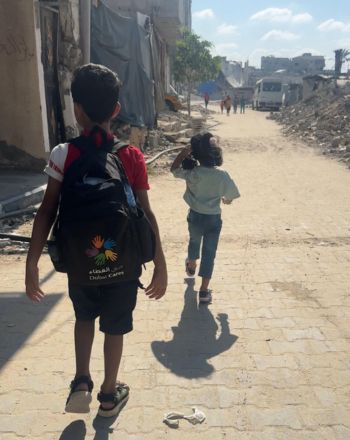
Photo: Amr Ali / Palestine Red Crescent Society
We wake up not because we’ve slept well, but because morning arrived. The space is tight, the heat suffocating. My children gather with others in the camp, trying to forget their basic needs for food and drink, for they already know the answer before they ask, there isn’t much to eat.
I head to work. Yes, I still work. With Palestine Red Crescent Society in Khan Younis. It gives shape to the day, a reason to move. The road there is not long, but the weight of the air makes it feel endless. When I return, I build. Not buildings, just the bare minimum: a makeshift bathroom, tarps to block the sun, cloth to cover cracks. I fix, I lift, I repeat. Everything is temporary. Everything is fragile. But everything is necessary. Evenings are quieter than they should be. We eat. We talk a little. And then we wait for sleep, or for the sky to light up again with fire.
Maria and Adam help. As much as children can. They carry, they arrange, they ask more questions than they used to. I think they understand too much now. They left behind their toys, their beds, the walls they used to draw on.They didn’t cry when we left, they just held onto the few things they were allowed to bring.
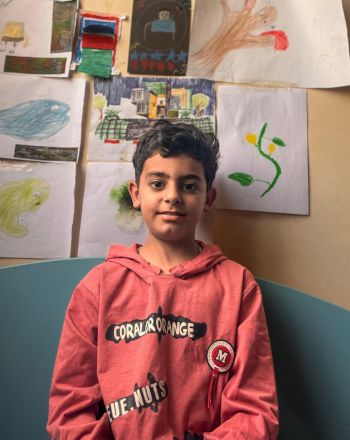
Amr's son, Adam.
Photo: Amr Ali / Palestine Red Crescent Society
That silence broke me more than any scream could. Sometimes I catch them sitting quietly, holding objects that no longer make sense in this version of life, a broken doll, a pencil case with no pencils. They’re doing their best. We all are. But this is not the childhood they deserve.