

Nepal
Humanitarion Situation in Nepal: Overview, Need for Aid, Canadian Red Cross Programs, Ways to Support, and 2015 Earthquake Response
- Humanitarian Situation and the Need for Aid in Nepal
- Supporting Community Health Through Local Solutions: Canadian Red Cross Programs in Nepal
- Donate to Support Canadian Red Cross Programs in Places like Nepal
- Canadian Red Cross 2015 Nepal Earthquake Response
Humanitarian Situation and the Need for Aid in Nepal
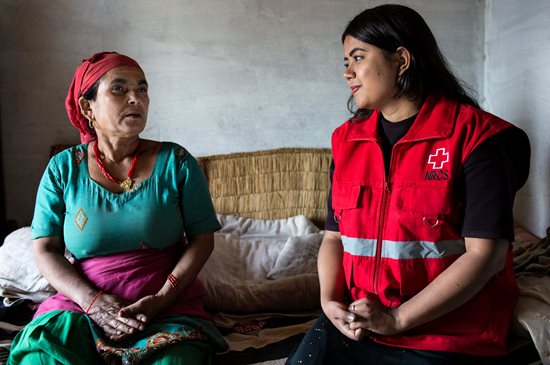 Photo: Marko Kokic / Canadian Red Cross
Nepal is known for its breathtaking landscapes and vibrant culture. Geographically situated in the heart of the Himalayas, this South Asian country is home to a population of more than 29 million people of diverse ethnicities, languages, and backgrounds.
Currently, Nepal is grappling with the challenges around health risks, livelihoods and rapid urbanization. Overcrowding has led to a strain on infrastructure, limiting access to basic health care services, housing, adequate water sanitation and hygiene services, and other essential services and resources. . While gradual recovery from the pandemic and the normalization of its economy offers hope to critical sectors like agriculture and tourism, Nepal remains highly vulnerable to a range of natural disasters such as earthquakes, floods, and landslides.
For the women of Nepal, who are already at an increased risk of gender-based violence and exploitation, urban growth and sudden disasters often intensify existing gender inequalities. Limited access to education and economic opportunities compounded by traditional gender roles, hinders their economic independence and social empowerment, and further perpetuates the cycle of poverty and marginalization.
Children are also negatively affected by these challenges, with limited access to quality education, safe living conditions and healthy development. As traditional support structures erode, elderly populations too may find themselves isolated and without social or financial support.
All these crises are profoundly impacting the lives, livelihoods and wellbeing of people and communities across the country, highlighting the urgent need for comprehensive and inclusive disaster relief, resilience building efforts and humanitarian aid in Nepal.
Supporting Community Health Through Local Solutions: Canadian Red Cross Programs in Nepal
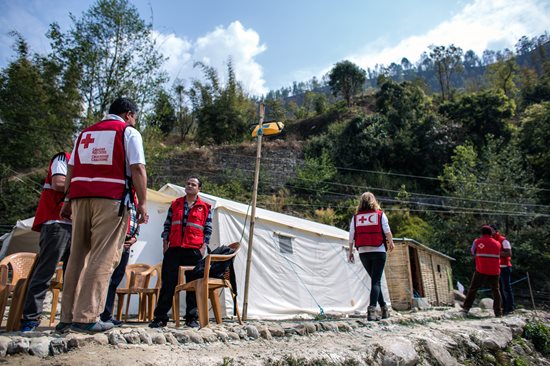
Photo: Marko Kokic / Canadian Red Cross
For nearly a decade, the Canadian Red Cross has been actively involved in supporting Nepal’s health systems and community resilience, through our partnership with the Nepal Red Cross Society and support to the Government of Nepal.
Since 1964 the Nepal Red Cross Society has played an important role as one of the country’s largest humanitarian organizations supporting disaster relief and response, as well as community development within the region. Besides responding to emergencies such as the COVID-19 pandemic, earthquakes and floods, the Nepal Red Cross Society also provides vital support through disaster risk reduction, healthcare, water and sanitation, first aid, eye care, ambulance services, and protection, gender and social inclusion activities.
Canadian Red Cross-supported programs focus on emphasizing overall community health in Nepal, by helping people address health inequalities, and through responding to climate-driven crises and other emergencies within the country. Our collaborative approach ensures that all programs and projects are culturally sensitive, contextually appropriate, and tailored to the specific needs of impacted communities with protection, gender and inclusion principles.
Currently, the Canadian Red Cross support to the Nepal Red Cross Society focuses on:
- Improving the health and wellbeing of communities and strengthen health preparedness and response.
- Improving psychosocial well-being.
- Strengthening the healthcare system’s climate resiliency to prepare for and respond to emergencies.
- Disaster risk management, with a focus on health
- Noncommunicable Diseases in humanitarian settings to enhance Government disaster risk management strategies.
- Support to Red Cross Emergency Clinic in response to sudden-onset disasters and disease outbreaks, such as cholera. This has been critical to providing health-care access in remote regions.
Over the several years of partnership, our work with Nepal Red Cross Society has also:
- Supported delivering maternal, newborn and child health and pre-hospital care services;
- Managing communicable and non-communicable diseases
- Providing psychosocial support;
- Establishing child-friendly spaces in health facilities;
- Supporting Nepal Red Cross Society to develop health policies and strategies, and Prevention of Sexual Exploitation and Abuse policies.
Brightness restored: Bandana’s journey from darkness to light
Bandana Pun, a one-year-old from Tarakhola RM-03, faced a life dimmed by congenital cataracts, until a collaborative humanitarian effort sparked a profound transformation and changed the trajectory of her life.
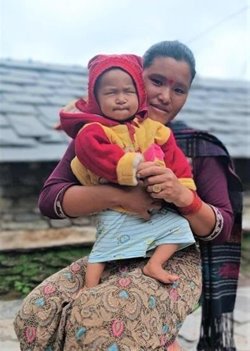 In June 2023, Bandana was diagnosed during a health and screening campaign activity organized by the Comprehensive Community Based Health Project (CCBHP) team. CCBHP is joint initiative that is led and funded by the Canadian Red Cross and implemented by the Nepal Red Cross Society. With coordinated efforts, including immediate treatment arrangements at the Himalayan Hospital Pokhara, her path to recovery became swift. Regular follow-ups and dedicated medical care paved the way for her remarkable turnaround.
Thanks to the combined efforts of multiple Red Cross National Societies, her world shifted from darkness to light. Bandana’s story isn’t simply about one child’s journey; it's a success story that demonstrates the profound impact of humanitarian organizations on the ground within local communities.
Photo and story: Gokarna Shrestha, Municipal Health Officer-Baglung / Nepal Red Cross SocietySuch initiatives demonstrate the power of collaboration and innovation in addressing complex health challenges in the country. Through mutual learning and shared experiences and lessons, we strengthen the capacity of the local Nepal Red Cross Society so that they can create lasting positive change in the lives of the people of Nepal.
Donate to Support Canadian Red Cross Programs in Places like Nepal
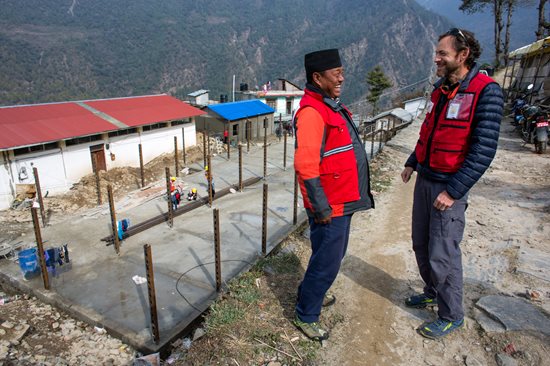
Photo: Marko Kokic / Canadian Red Cross
The best way to support Canadian Red Cross programming in countries like Nepal is to make a donation to the International Programs Fund.
Donate to the International Programs Fund
Your gift helps us establish health care and water and sanitation programs and contributes to making families and communities more resilient against future disasters, climate crisis or conflict situations. Your donation allows us to help prevent, prepare for, and alleviate the suffering of those impacted by disasters and crises by responding to humanitarian needs, promoting community agencies to address humanitarian crises, strengthening local capacity, and investing in preparedness. Your support will contribute to building more resilient communities in areas around the world.
Read more about how International Program Fund donations have helped Canadian Red Cross deliver programming around the world.
Canadian Red Cross Response to the 2015 Nepal Earthquake
In response to the devastating 7.8 magnitude earthquake in Nepal in 2015, people in Canada were quick to help, joining 29 other countries around the world to support the efforts on the ground. The Canadian Red Cross swiftly mobilized to provide crucial support, and within days we established an emergency field hospital in the hard-hit rural community of Dhunche close to the earthquake’s epicenter, offering essential medical care. Our initial response focused on delivering emergency relief supplies, including food, first aid, water, and shelter, to thousands of impacted individuals and households. We continue to collaborate with the Nepal Red Cross Society for both immediate relief and longer-term recovery programs that strengthen Nepal's preparedness against future disasters.
This response to the Nepal Earthquake was made possible thanks to the generosity of Canadians and the Government of Canada.