
Keep Cool and Carry On: Manage summer heat waves
 It seems like the snow just melted and we’re already preparing for our first heat wave of the season. With some scorchers on the horizon, now is a good time for a reminder on how to stay cool and what to watch for in case of overexposure to heat.
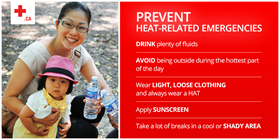
“Drink plenty of water,” says Lynn Kolba, Canadian Red Cross spokesperson. “It sounds obvious, but when you are out having fun in the sun for a couple of hours, you can lose track of how hydrated you are and run into trouble before you know it. And don’t forget about Fido! Pets need water and shade as well.”
So be prepared. Before you head out for the day, check weather reports for heat warnings. Slather on sunscreen as sunburned skin loses the ability to cool itself.
More tips to help you stay safe during hot weather.
- Avoid being outdoors during the middle of the day. Instead, try going out in the early morning or later evening hours when the sun is not as strong. Where possible, try to spend the hottest hours of the day in an air-conditioned environment.
- Slow down activities that increase your body temperature. Work, exercise, and play in brief periods and take frequent breaks in a cool or shaded area.
- Dress in light, loose clothing. Wear a hat and sunglasses.
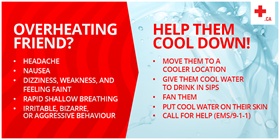 Heat-related emergencies include heat cramps, heat exhaustion and heat stroke. Children, the elderly, and those with certain health conditions are particularly susceptible, but these emergencies can happen to anyone who stays in the summer heat for too long.
Heat cramps
-
mild muscle contractions that can become severe, usually in the legs or abdomen
-
moist skin
Heat exhaustion
-
moist skin
-
skin that is redder or paler than normal
-
nausea
-
dizziness and weakness
- exhaustion
Heat stroke
-
high body temperature
-
red, hot, dry skin
-
irritable, bizarre, or aggressive behaviour
-
progressive loss of consciousness
-
rapid, weak pulse becoming irregular
-
rapid, shallow breathing
-
seizures
For more information on keeping your summer safe and enjoyable, head to redcross.ca.
Regions
NationalAlberta
British Columbia
Manitoba
New Brunswick
Newfoundland and Labrador
Northwest Territories
Nova Scotia
Ontario
Prince Edward Island
Quebec
Saskatchewan
Nunavut
Yukon
Worldwide
Africa
Americas
Asia
Middle East and North Africa
Europe
Topics
Community HealthEmergencies and Disasters in Canada
Emergencies and Disasters Worldwide
Finding Family
First Aid and CPR
International Humanitarian Law
Migrant and Refugee Services
Our Impact on the Ground
Philanthropy News
Violence, Bullying and Abuse Prevention
Volunteer
Water Safety
Youth
Indigenous Communities
Maternal Newborn and Child Health
Refugee Crisis
Refugee Arrival